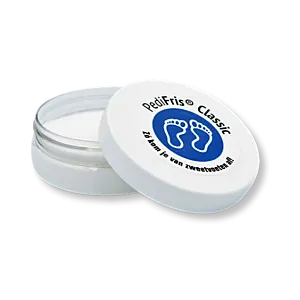

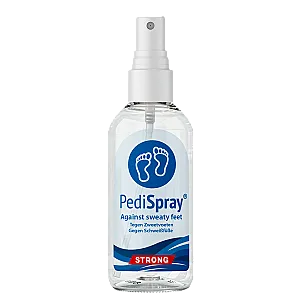
PediSpray® Strong
For the skin of your feet: helps reduce excessive sweating
Pitted keratolysis consists of small craters on the soles of the feet caused by bacteria that thrive on warm, moist skin. A strong odour and white, soft skin often occur at the same time.

Start with self-care: wash and dry your feet daily, change damp socks and alternate your shoes. If the pitted areas, odour, itching or pain persist, contact your GP.
.svg)
 Jan henk Crouwers
Thomas De Jager
Roger Schmidt
Wicher
IdKvH
Helmut Tijssen
Bernd
Pim
Jan henk Crouwers
Thomas De Jager
Roger Schmidt
Wicher
IdKvH
Helmut Tijssen
Bernd
Pim
 Bernd
Bernd
 roger christiaen
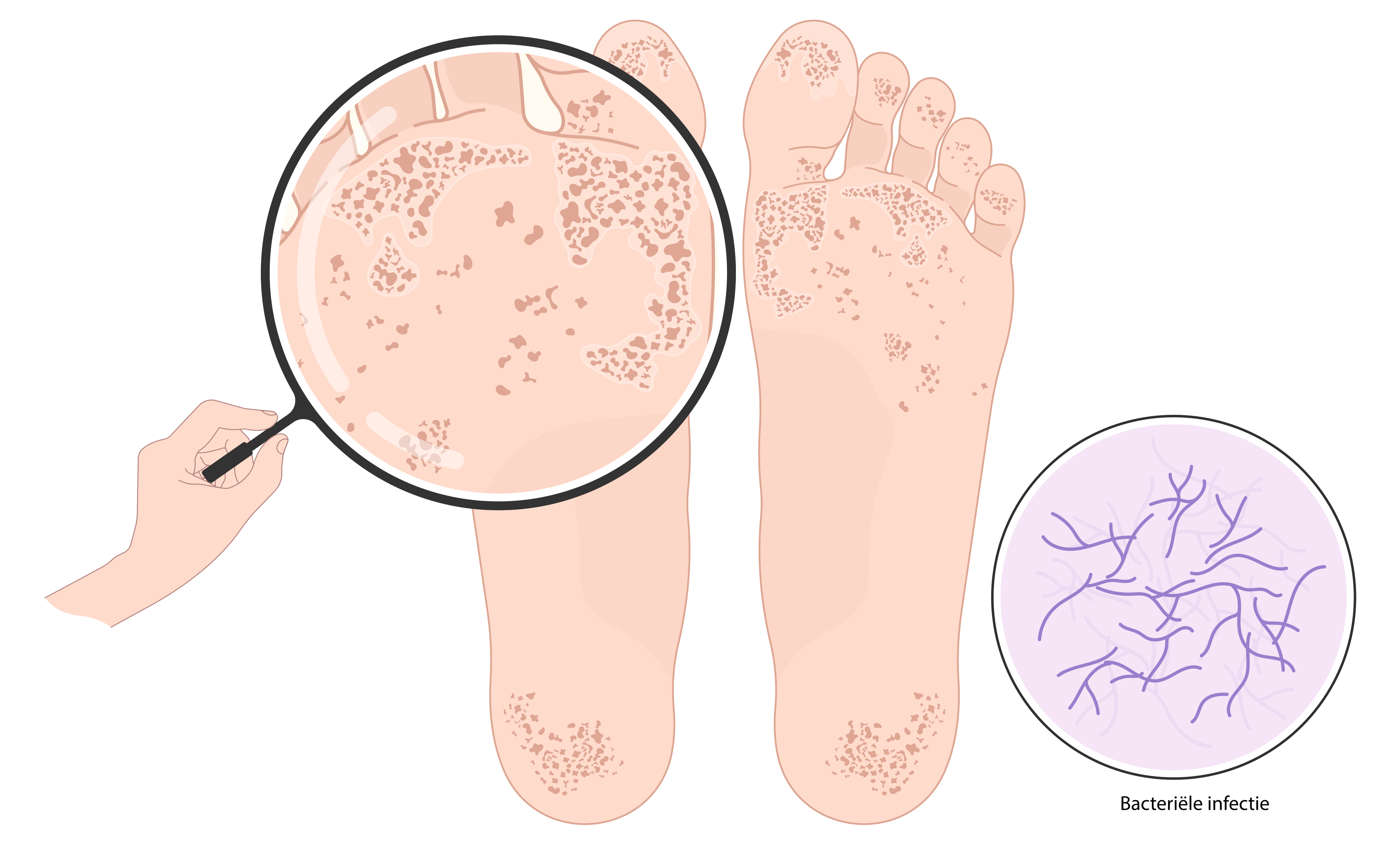
Pitted keratolysis causes many small craters in the uppermost layer of skin on the sole of the foot. The bacteria thrive particularly on warm, damp feet.
A strong odour, white or soft skin and pitted areas at pressure points are characteristic. If in doubt, have the diagnosis assessed by your GP.
Start with a regular daily routine. Keep the skin clean and dry, minimise moisture build-up and allow worn shoes time to air.
Wash with water and, if there is a lot of sweat, with water and mild soap. Also dry carefully between the toes.
Put on clean socks every day and change them sooner if they become damp.
Do not wear the same pair every day. Remove the insoles and allow worn shoes to air thoroughly.
A foot antiperspirant helps to reduce the amount of moisture on the skin. Use it consistently as part of your routine.
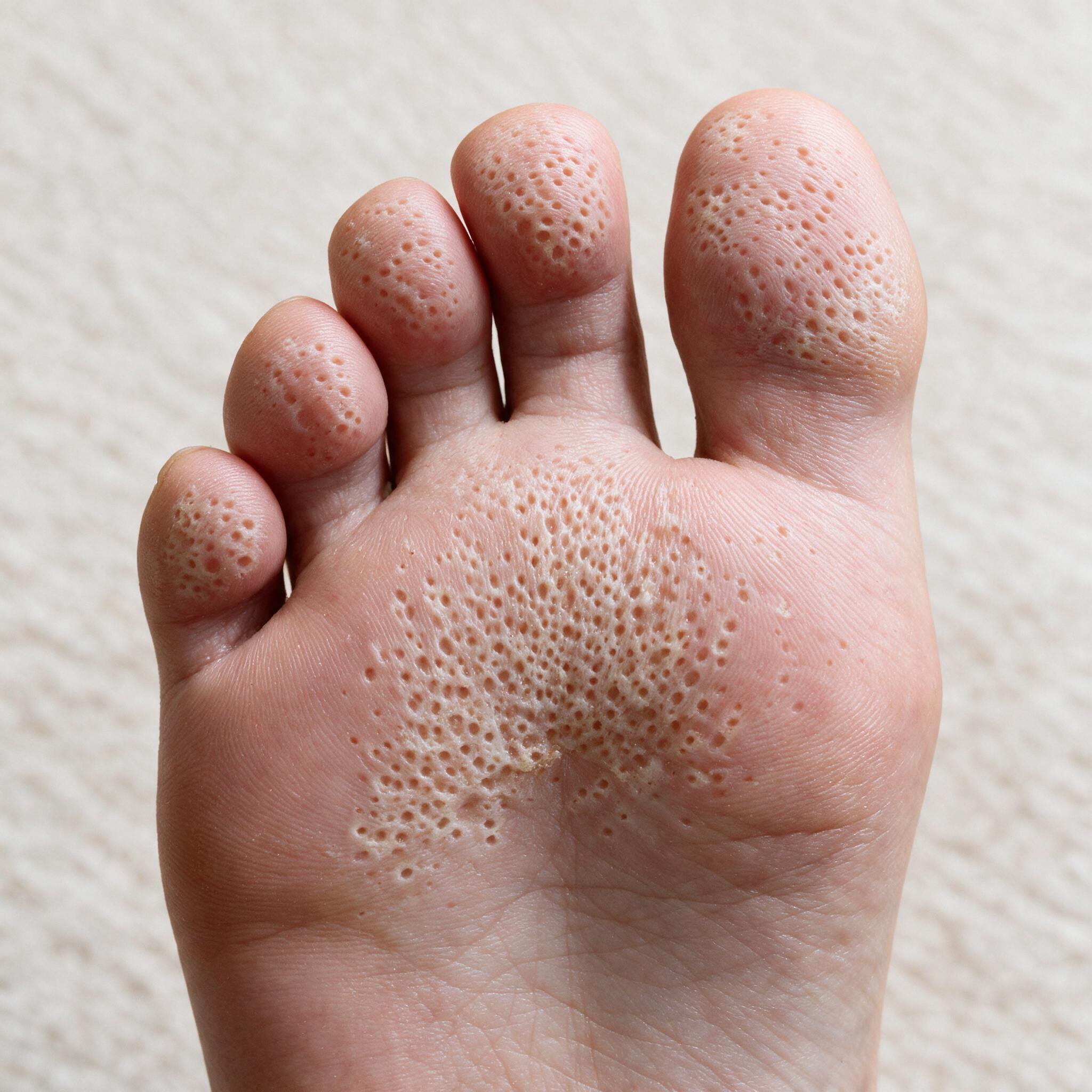
The pits are usually found on the parts of the foot that bear weight when standing or walking. They can merge to form larger areas. Odour may be more noticeable than itching.
Small craters on the soles of the feet with a strong odour are characteristic of pitted keratolysis. Itching, flaking and cracks between the toes are more commonly associated with athlete’s foot.
Is the smelly build-up under the toenail, without any pits in the sole? If so, please read the explanation about toe cheese.
Apply PediSpray® to the skin of the feet and use PediFris® Classic in shoes. Follow the instructions on the packaging. This makes it easy to incorporate both products into your daily routine of washing, drying and changing your socks and shoes.
Wash your feet, dry them thoroughly and put on clean socks.
Spray in the evening onto clean, dry and intact skin on the feet. Allow the product to dry before putting on socks.
Sprinkle a small amount into the shoe and distribute the powder by shaking briefly.
If the pitted areas, strong odour, itching or pain persist despite this self-care, please contact your GP.
Please contact us if you experience pain, sores, inflammation, diabetes or symptoms that do not improve despite the prescribed treatment. Stop experimenting on your own if your skin becomes further damaged.
Frequently asked questions about pitted keratolysis
Brief answers on recognition, self-care, treatment and the difference from related foot conditions.
Pitted keratolysis are small craters in the uppermost layer of skin on the sole of the foot, often accompanied by a strong odour. It is a superficial bacterial infection, also known as pitted keratolysis.
You will see many small pits on pressure points on the sole of the foot, sometimes accompanied by white or soft skin and a strong odour. A GP can assess whether it is actually pitted keratolysis.
Start with daily self-care: keep your feet clean and dry, change damp socks, alternate your shoes and manage excessive sweating. If the pitted areas, strong odour, itching or pain persist despite this routine, contact your GP.
No. Pitted keratolysis is caused by bacteria and results in small pits on the sole of the foot. Athlete’s foot is a fungal infection that is more commonly associated with itching, flaking or cracks.
Pitted keratolysis appears as small craters on the sole of the foot. Toenail fungus is a malodorous build-up of skin material, moisture and dirt under the toenail.
Drier skin makes the warm, moist environment less favourable for bacteria. Reducing sweat supports this approach, but is no substitute for a medical assessment or antibacterial treatment.
PediSpray® is for use on the skin of the feet, whilst PediFris® Classic is for use in shoes. Use both as directed on the packaging as part of your daily self-care routine. If skin symptoms persist, seek medical advice.
Written by Judith de Jong (Content owner, PediFris®). Medically reviewed by Sébastien Dequidt, podiatrist. Updated on 25 August 2026. We base our advice on foot care practice and on the medical sources listed below.
Worried about a persistent complaint, fungal nail, athlete’s foot or excessive sweating? Consult your GP, podiatrist or chiropodist.

.svg)