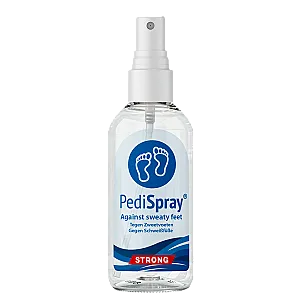

Choose your concentration: 15% or 20%
Start with PediSpray® Regular (15% aluminium chloride) if you have sensitive skin. If you sweat a lot or notice too little difference, choose Strong (20%).
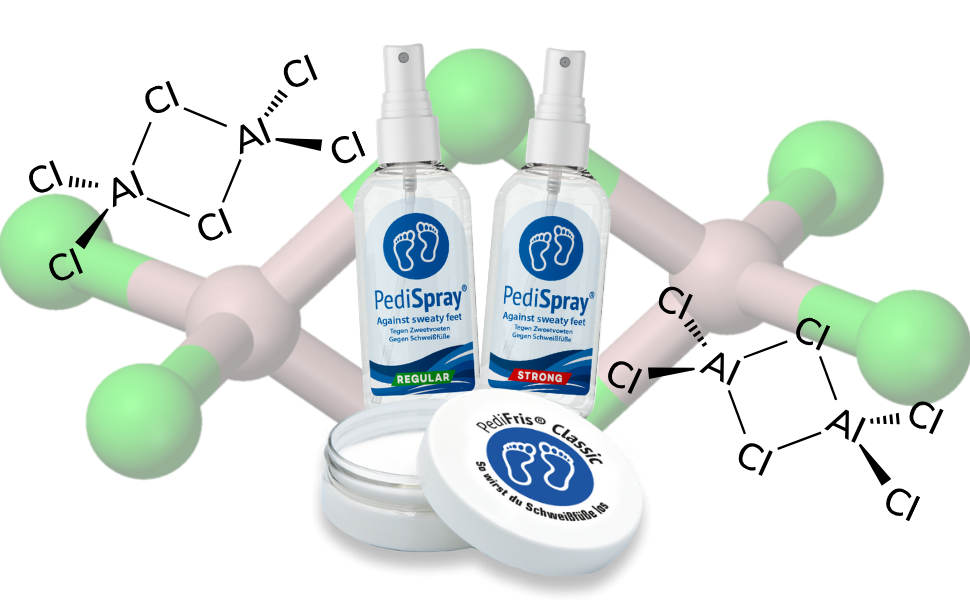
Aluminium chloride for sweaty feet inhibits sweat secretion on the skin, so that feet are less likely to feel clammy in closed shoes. PediSpray® Regular (15%) and Strong (20%) deliver this active ingredient ready to use: choose your strength, spray onto dry feet and gradually build up your usage.
.svg)
 Arnold
Edith
Wjm Gertsen
Anoniem
Dennis Sluimer
Arnold
Edith
Wjm Gertsen
Anoniem
Dennis Sluimer
 Joachim Traub
Martina Müller
Marjanne Prins
HAN
Naim Acharcaui
Joachim Traub
Martina Müller
Marjanne Prins
HAN
Naim Acharcaui
Aluminium chloride for sweaty feet
Aluminium chloride is a commonly used active ingredient in antiperspirants. It helps to temporarily reduce sweat production on the skin.
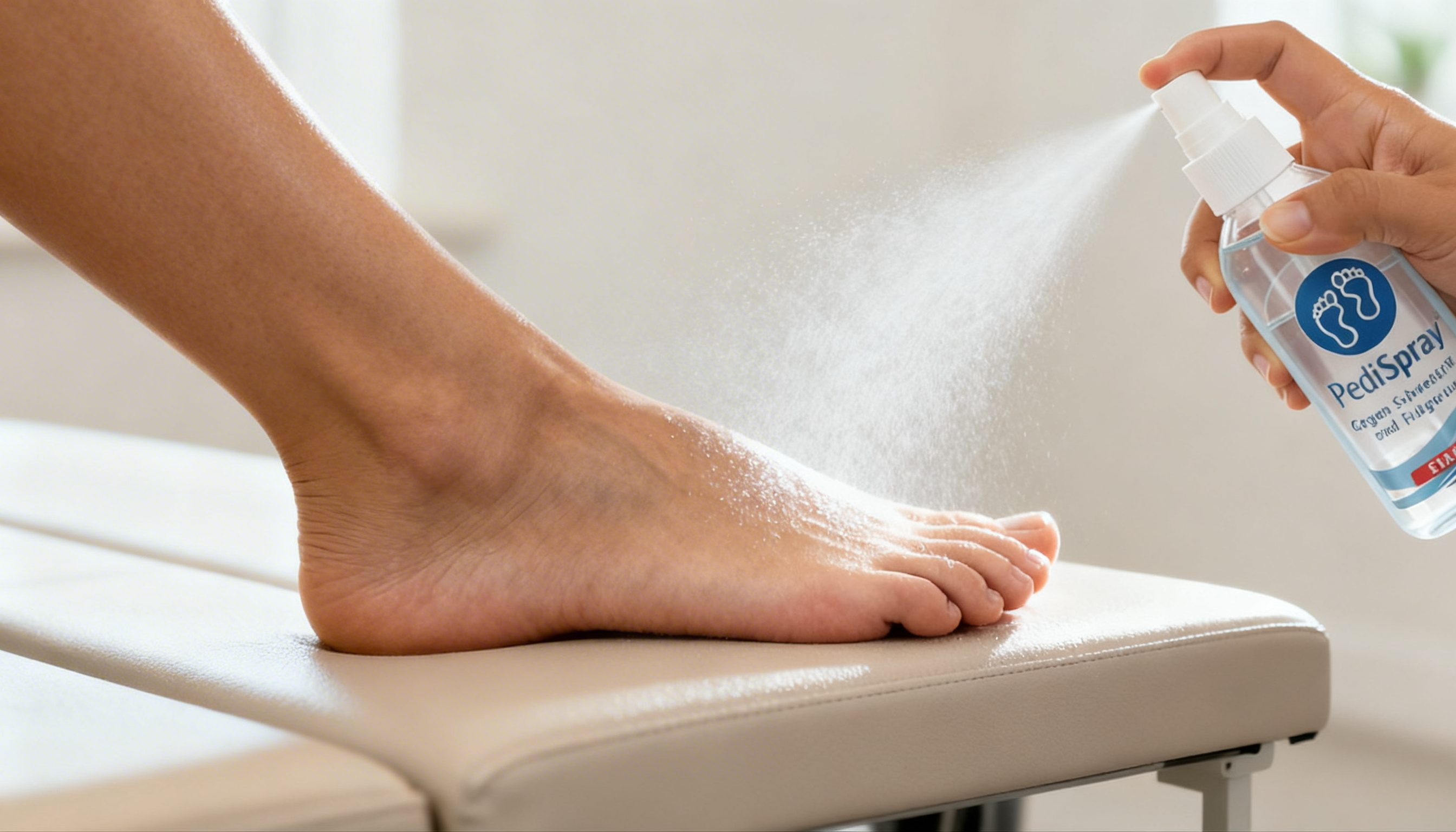
For sweaty feet, this means: less clammy soles, less moisture in your socks and a fresher feeling in closed shoes.
PediSpray® is a ready-to-use, fragrance-free spray containing aluminium chloride. Simply apply it directly to the skin and build up usage in a way that remains comfortable for your feet.
Follow these steps for the best results.
Start with PediSpray® Regular (15% aluminium chloride) if you have sensitive skin. If you sweat a lot or notice too little difference, choose Strong (20%).
Apply the spray to clean, completely dry feet, preferably in the evening. Allow it to dry thoroughly before putting on socks, so that the aluminium chloride can take effect on the skin.
Use it daily for the first few days, then once or twice a week. If you notice any redness or a burning sensation, use it less frequently. Sprinkle PediFris® Classic powder into your shoes to keep them fresh.
Aluminium salts help to temporarily reduce perspiration. As soon as the product comes into contact with moisture on the skin, a thin, temporary film forms at the opening of the sweat glands.
This means less sweat reaches the skin’s surface, keeping your feet dry and comfortable for longer. The effect is not permanent: due to the skin’s natural renewal process, this layer will disappear on its own. How long the effect lasts varies depending on the individual, the product and the level of perspiration.
A higher concentration is not automatically better. It’s about striking the right balance between effectiveness and how well your skin tolerates it. For some feet, 15% is more than enough, whilst others benefit more from 20% if the skin tolerates it well.
‘Regular’ is a good place to start for many people. If you do need a bit more protection, you can always switch to ‘Strong’.
Preferably use aluminium chloride on clean, completely dry feet. Apply it specifically to the soles of the feet and the areas where you notice the most sweating. A thin, even application is usually more comfortable than using too much product at once.
Allow the product to dry thoroughly before putting on socks. This helps it absorb better into the skin and reduces the risk of staining fabrics. Do not use on damaged skin or areas that are clearly irritated.
Build up the frequency gradually. If you notice redness, tightness or a burning sensation, use it less often or reduce the concentration from 20% to 15%. It is precisely this gradual build-up that makes the difference between a product that continues to work well and one that you’ll soon stop using.
Always combine this care routine with good hygiene, daily washing and wearing clean socks and well-ventilated shoes. This results in fresh feet and shoes, and consequently greater self-confidence.
PediSpray® keeps the skin dry, thereby reducing the opportunity for bacteria to develop.
Are you unsure whether to use 15% or 20%? View PediSpray Regular and Strong Compare them side by side and choose the one that best suits your skin and your daily routine.
Brief answers regarding mechanism of action, concentration, skin comfort and pitted keratolysis.
PediSpray Regular contains 15% aluminium chloride. PediSpray Strong contains 20% aluminium chloride. The difference lies in the concentration and, consequently, in how strongly it works and how your skin reacts to it.
Aluminium chloride is widely used in antiperspirant products designed to reduce perspiration on the skin. For many users, this means less stickiness and slower odour development.
15% is often a sensible starting point if you want to build up gradually or have more sensitive skin. 20% is more suitable for people seeking greater support and who know their skin tolerates it well.
No. Do not use on open wounds, broken skin or clearly irritated areas. Allow the skin to heal first or seek advice if in doubt.
No. A deodorant focuses primarily on odour, whereas an antiperspirant is designed to reduce sweat on the skin. That difference is important if sweaty feet are your main concern.
Moisture reduction can be helpful, as less moist skin is less conducive to bacterial growth. However, pitted keratolysis usually remains a condition where several steps together are important.
Apply PediSpray preferably in the evening to clean, dry feet. Use daily for the first few days, then usually once or twice a week. Once you notice sufficient improvement, gradually reduce the frequency to whatever your feet require.
The pharmacy solution (15% or 20%) uses the same type of aluminium salts, but often requires dabbing, can cause irritation, leaves stains and is flammable. PediSpray is a ready-to-use, fragrance-free spray available in Regular 15% or Strong 20%: simply spray, allow to dry and build up gradually.
Use it less frequently, or switch from Strong (20%) to Regular (15%). Apply only to completely dry, intact skin. If the skin remains irritated, allow it to recover first and, if in doubt, seek advice.
Less sweat on the skin often means that odours develop more slowly in socks and shoes. It remains an antiperspirant approach (reducing moisture), not a deodorant that merely masks odours. To keep your shoes fresh, you can combine it with PediFris Classic powder.
Written by Judith de Jong (Content owner, PediFris®). Medically reviewed by Sébastien Dequidt, podiatrist. Updated on 30 July 2026. We base our advice on foot care practice and on the medical sources listed below.
Worried about a persistent complaint, fungal nail, athlete’s foot or excessive sweating? Consult your GP, podiatrist or chiropodist.

.svg)