
PediSpray® Strong
Direct reduction of perspiration
A fungal nail is a crumbling and yellow-coloured nail. It is an annoying condition that not only affects the appearance of the nail, but can also be painful.
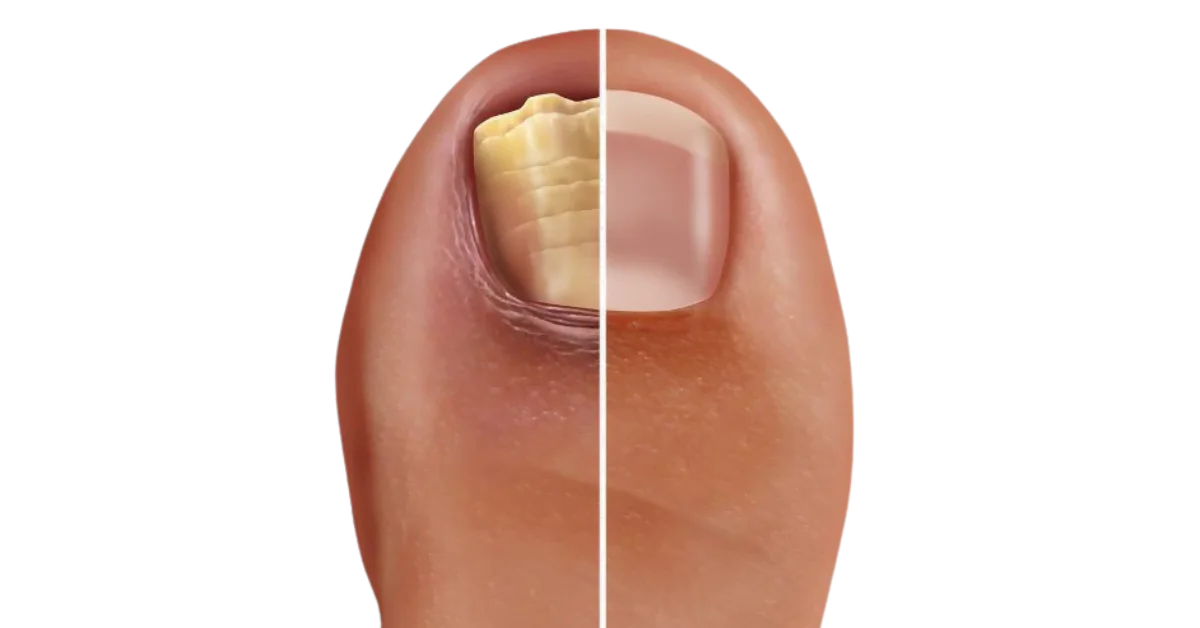
Because of this, many people assume that a thickened, discoloured nail is always a fungal nail. But such a nail is not always caused by a fungal infection.
Preventing toenail fungus & re-infection
Nail fungus (onychomycosis) often develops following athlete’s foot and thrives in damp conditions. PediFris® tackles the root cause: dry feet (PediSpray®) and a dry environment inside the shoe (PediFris® Classic powder) help prevent fungal nail infection, combat its spread and re-infection, and can alleviate symptoms. An active nail fungus should also be treated with antifungal medication.
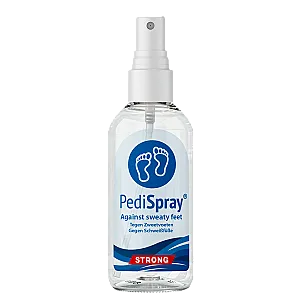
PediSpray® (Strong or Regular): drier skin is less conducive to fungal infections, which can spread to the nails.
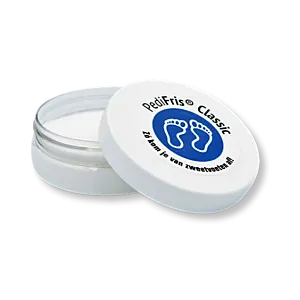
PediFris® Classic powder in shoes: keeps the inside of the shoes dry, reducing the chance of fungal spores.
Keep feet and shoes dry during and after treatment — otherwise, a fungal nail infection is likely to return.
.svg)
 Berge
Dirk Pot
mart slaats
BK
Berge
Dirk Pot
mart slaats
BK
 G.W.
Jan henk Crouwers
Thomas De Jager
Roger Schmidt
Wicher
IdKvH
G.W.
Jan henk Crouwers
Thomas De Jager
Roger Schmidt
Wicher
IdKvH
Fungal nails are a common problem that many people suffer from. Colloquially, they are often called nail fungus, while the medical term is onychomycosis. A fungal nail occurs when a fungus enters the nail and causes an infection there. Although it can also occur in fingernails, we see it by far the most in toenails.
The infection usually starts innocently at the edge of the nail, but gradually spreads over the entire surface. You can recognise a fungal nail by the following characteristics:
The nail becomes thicker and friable.
A whitish-yellow, brown or even greenish discolouration develops.
Over time, the nail may loosen or feel painful when wearing shoes
A thickening in the nail can have several causes besides fungal infection, age can also play a role. The ageing process can produce increased production of keratin (Onychograrypos), which can also make nails brittle and thickened.
Dermatophytes are fungi that can cause a superficial infection of the skin or nail. You can contract this fungus when:
The skin or nail damp for a long time is (as in sweaty feet).
There is minor injuries to the foot or nail.
There close contact is with other people (e.g. in swimming pools or changing rooms).
There is poor hygiene.
In addition, Candidagist a role. This lives in everyone on healthy skin, but can grow into a fungus under the right conditions. This weakens the immune system and encourages infection, especially when combined with:
Medicines such as antibiotics.
A lowered resistance(due to diabetes, burnout or chemotherapy).
Skin disorders such as eczema or psoriasis.
Trauma or irritation(a blow to the nail, too much pressure or nail biting).
Infections and other medications.
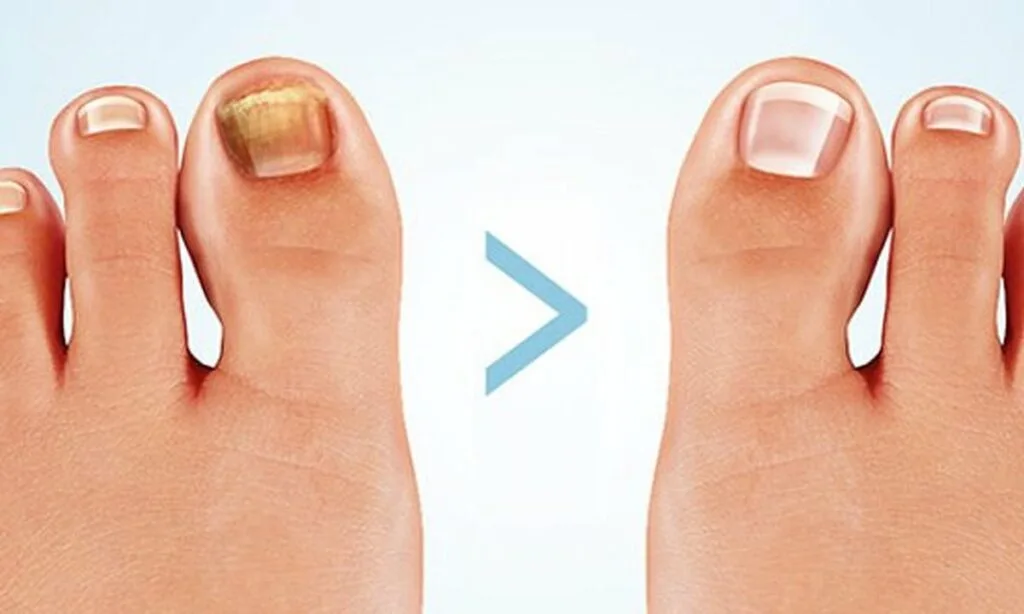
The difference between a fungal nail and a healthy nail is usually clearly visible. Pay attention to the following signs:
A thickened nail which feels brittle and fragile.
Discolouration ranging from yellow to brownish.
Crumbling of the nail, which can lead to painful inflammation.
In advanced stages, the skin may be loose all around or the nail completely detaching.
This can prevent a lengthy healing process
Treating a fungal nail requires patience. Because the nail has to grow out completely, a course often takes 8 weeks to up to a year. It is crucial not to interrupt the treatment, otherwise the fungus will quickly regain the upper hand. A successful treatment targets not only the nail itself, but also the area around the foot.
If the mould is still on the surface, a localised approach will suffice:
PediFris® Classic: This is an indispensable step in your treatment. This is because fungi survive in your shoes and constantly reinfect them. PediFris® Classic kills these fungi in your footwear, giving your nails a real chance to grow healthy.
PediSpray®: A dry foot is the enemy of fungus. PediSpray® helps keep your feet dry by regulating excessive sweating. By doing so, you deprive the fungus of the moist breeding ground it needs to survive.
Natural remedies: Products with Thymol(thyme extract) or Tea tree oil have antiseptic and fungicidal properties.
Antifungal ointment or nail polish: Apply directly to the nail for targeted action.
Laser: In this process, fungi are effectively destroyed by heat.
Extra tip: Every week, gently file away the top layer of the affected nail. This allows ointments, nail polish and the actives in your skincare products to penetrate much deeper into the nail for faster and more powerful results.
Fungal nails caused by a fungal infection cannot heal on their own. So "prevention is better than cure".
Maintain your feet regularly and have them inspected and treated by a (medical) pedicurist. This will prevent many foot problems or stop them in time.
Try to walk barefoot as much as possible. Feet that can air a lot are less prone to fungi and bacteria. This also prevents unpleasant odours.
Remember to wear slippers in public areas so you do not have direct contact with the floor

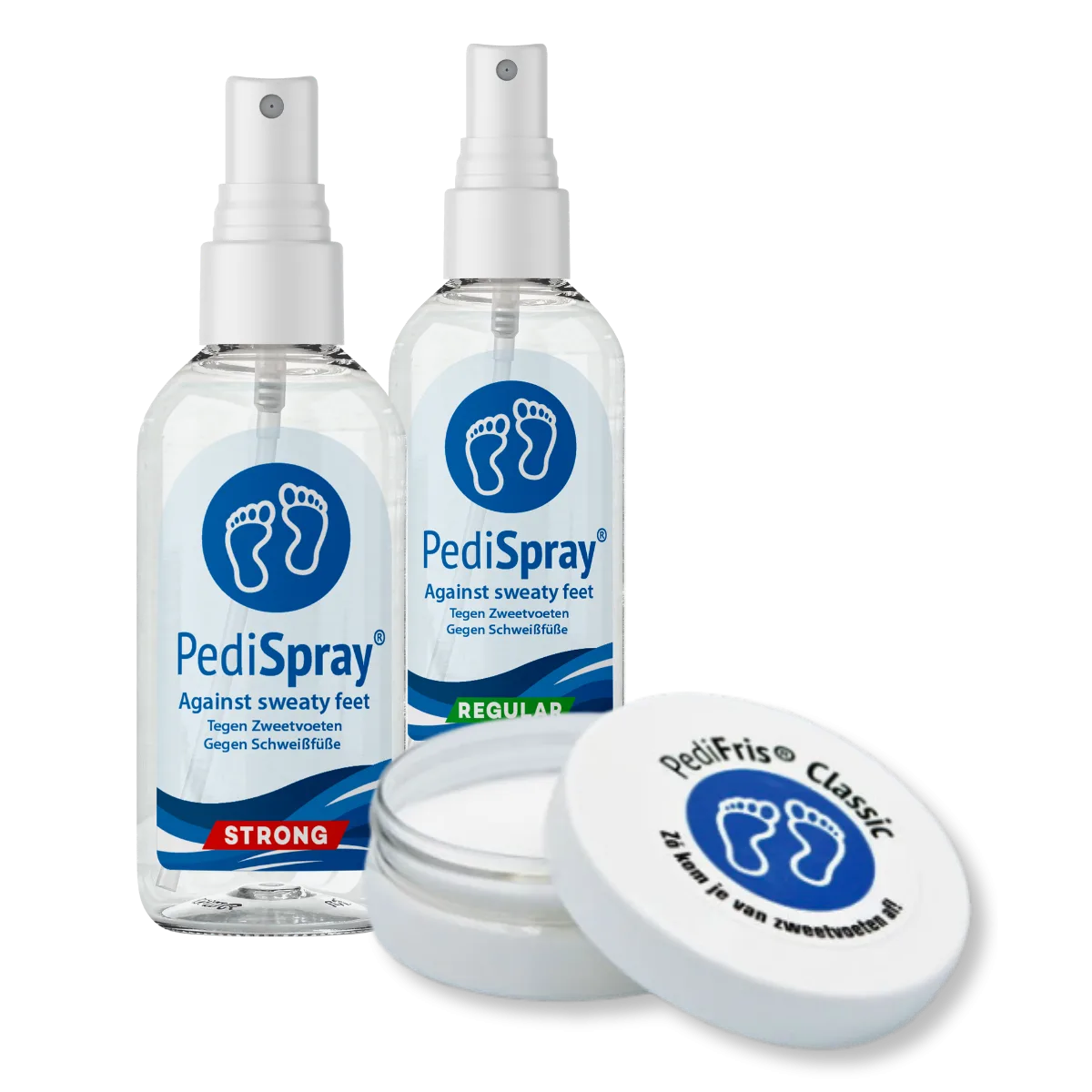
PediFris® tackles the root cause — moisture and a warm environment inside the shoe: dry feet (PediSpray®) and a dry environment inside the shoe (PediFris® Classic) help prevent fungal nail infections, combat spread and re-infection, and can alleviate symptoms. For toenail fungus, combine with an antifungal treatment.
A fungal nail is a thin, swollen, crumbling and yellow-coloured nail that may be affected by the Candida fungus or the typical athlete’s foot fungus: dermatophytes.
As a result, many people assume that a thickened, discoloured nail is always a fungal nail. However, such a nail is not always caused by a fungal infection.
A thickening of the nail can have various causes; in addition to fungal infection, ageing can also play a role. The ageing process can lead to increased production of keratin (onychogranuloma), which can cause the nails to become brittle and thickened.
Dermatophytes are fungi that can cause a superficial infection of the skin or nail; this fungus is present in your nail, and you can contract it if:
Candida yeast lives in everyone’s gut and on healthy skin. Under the right conditions, this yeast can thrive and develop into a fungus. The fungus weakens the immune system and promotes a candida infection, particularly in combination with:
How to recognise a fungal nail infection: The difference between a fungal nail infection and healthy nails is often easy to spot. This is usually evident from a thickened nail that is discoloured (yellow/brownish) and brittle. This often leads to the nail crumbling, causing painful inflammation, which can subsequently result in loose skin or a nail that is coming away.
Treating fungal nail infection: Fungal nail infection is often persistent; if you wish to treat it, you must prepare yourself for a long process. Once started, you must not interrupt the treatment, as this will prolong the healing process. In many cases, treatment takes between eight weeks and a year before your nails are healthy again.
Treating the upper nail plate: If the fungus is not yet advanced, treating the upper nail plate may be sufficient. This is only possible if the fungus is superficial. You can do this with an ointment, spray, antifungal nail varnish, or laser treatment:
One of the quickest ways to get rid of your fungal nail infection is to visit your GP so that they can prescribe a course of tablets. This is the most effective way to treat an advanced fungal nail infection.
This can cause side effects, which is why these medicines are only available on prescription and are often used as a last resort
Have you finished a course of treatment for fungal nail infection? If so, do have your feet checked by a chiropodist or a medical specialist to see if the infection has really been cured
Yes, a fungal nail infection is contagious: you can catch it from someone else and you can pass it on to others.
This is because the fungus is also present in the nail or skin. These can shed flakes that spread via the floor of a sports hall or shower room, such as those found in a swimming pool.
Fungal nail infections do not clear up on their own. So ‘prevention is better than cure’.
Look after your feet regularly and have them checked and treated by a (medical) chiropodist. This will help you prevent many foot problems or nip them in the bud.
Try to walk barefoot as much as possible. Feet that get plenty of air are less prone to fungal infections and bacteria. This also helps prevent unpleasant odours.
Do remember, however, to wear slippers in public areas so that you do not come into direct contact with the floor
Sweaty feet play a significant role in the development of fungal nail
Preventing and treating fungal nail infections
Written by Judith de Jong (Content owner, PediFris®). Medically reviewed by Sébastien Dequidt, podiatrist. Updated on 4 July 2026. We base our advice on foot care practice and on the medical sources listed below.
Worried about a persistent complaint, fungal nail, athlete’s foot or excessive sweating? Consult your GP, podiatrist or chiropodist.