
Use an antifungal agent
Choose a skin treatment from a chemist’s or pharmacy. Follow the instructions for use and complete the course of treatment, even if the symptoms improve sooner.
Athlete’s foot is a contagious fungal infection of the skin, often found between the toes. It is usually recognised by itching, flaking, white, soft skin or cracks.
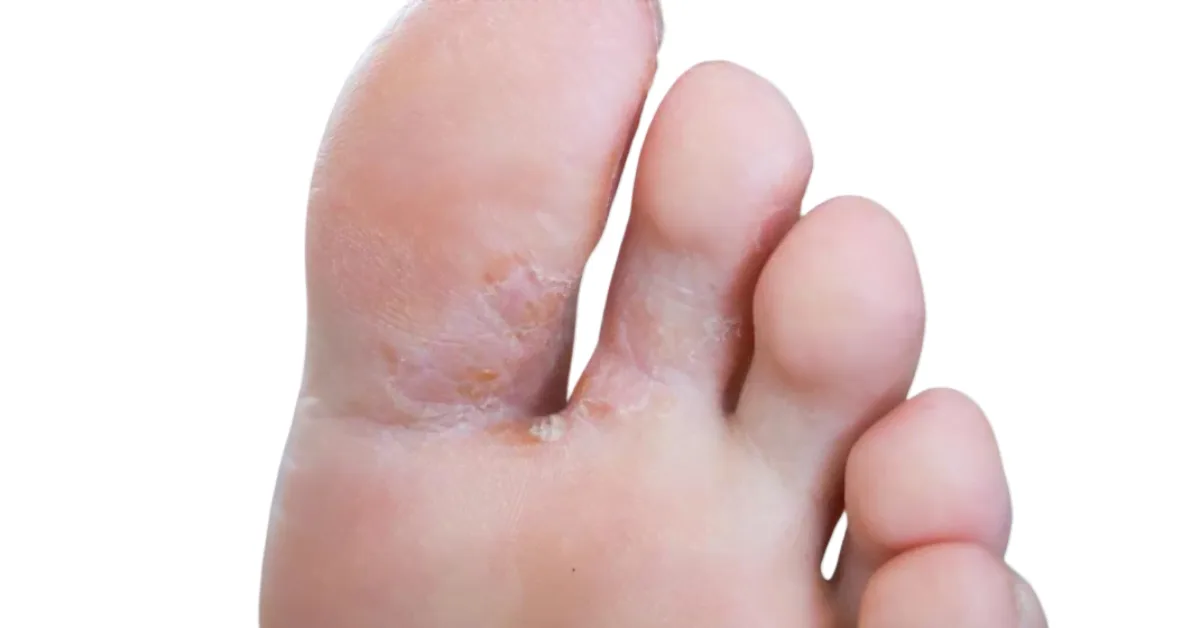
Treat the skin with an antifungal product from a chemist’s or pharmacy and follow the instructions for use fully. Also, keep your feet, socks and shoes dry to prevent re-infection.
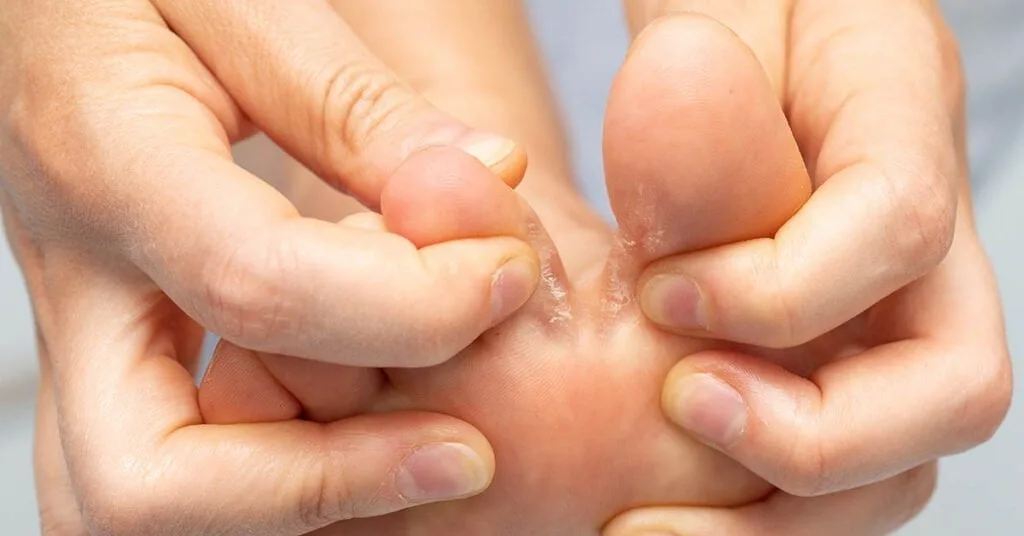
Athlete’s foot often starts between the little toe and the toe next to it. Look out for itching, flaking, redness, white, soft skin and painful cracks.
The same fungus can also affect the soles of the feet. If in doubt, a GP can assess whether the condition is caused by a fungal infection, eczema or another skin condition.
Treat the fungal infection on the skin whilst simultaneously reducing moisture and preventing further infection.
Choose a skin treatment from a chemist’s or pharmacy. Follow the instructions for use and complete the course of treatment, even if the symptoms improve sooner.
Rinse the soap off thoroughly and dry carefully, especially between the toes. Use a clean towel and do not share it.
Choose socks that wick away moisture effectively and change them sooner if they become damp.
Change your shoes and allow each pair to air out. Wear flip-flops in communal showers, swimming pools and changing rooms.
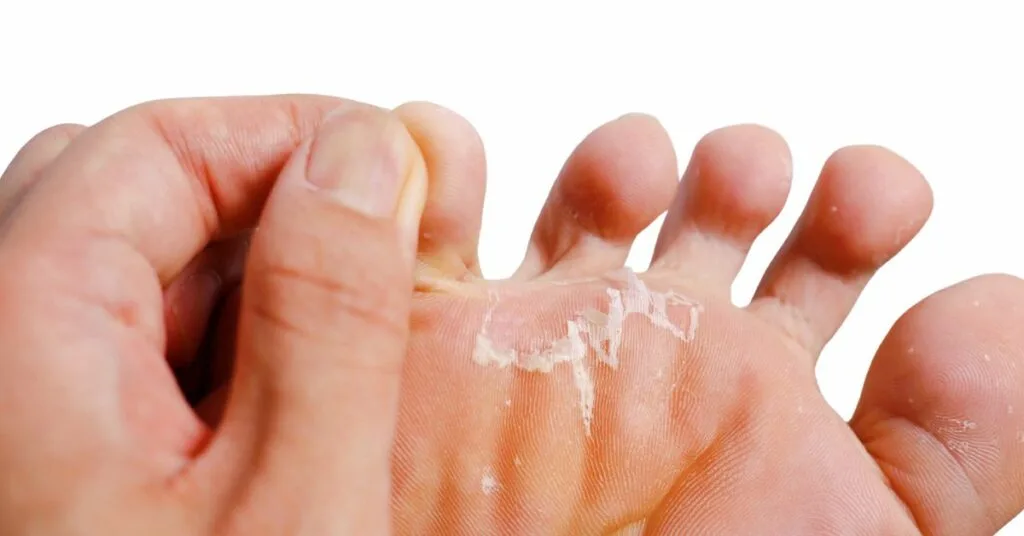
Heat and moisture make the skin more vulnerable and help fungi to spread. Therefore, do not just treat the visible area, but also socks, towels and shoes.
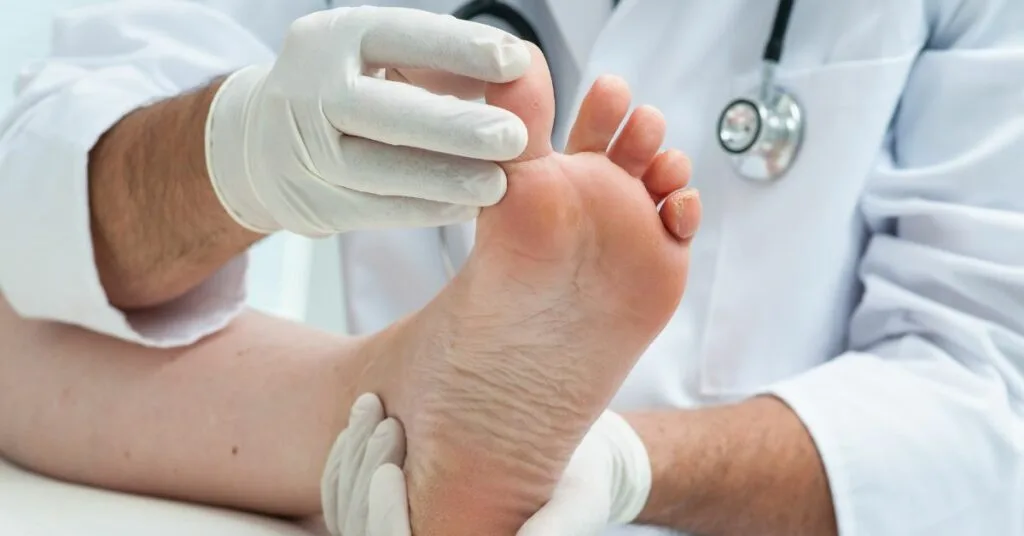
A foul-smelling build-up under the nail is more likely to be toe cheese. Many small craters on the sole of the foot with a strong odour are more likely to be associated with pitted soles.
These conditions may occur simultaneously. Therefore, choose the treatment based on the location and the appearance of the skin, not solely on the basis of odour.
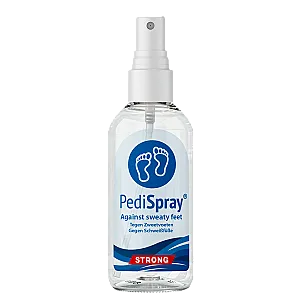
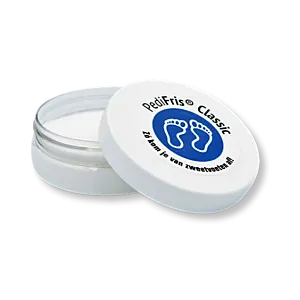
An antifungal treatment is applied to the skin. In addition, use PediSpray® in cases of excessive sweating and PediFris® Classic in shoes. This helps to reduce moisture on the feet and tackle odour-causing micro-organisms in the footwear.
Choose a skin treatment from a chemist’s or pharmacy. Complete the course of treatment as directed, even if you notice a reduction in itching or flaking before then.
Apply PediSpray® in the evening to clean, dry and intact skin on the feet. Allow the spray to dry before putting on socks.
Sprinkle a small amount into the shoe and distribute the powder by giving the shoe a quick shake. Classic neutralises shoe odours and combats odour-causing bacteria and fungi in shoes.
Put on clean socks every day and allow each pair of shoes time to air out. Do not share towels or nail care tools.
.svg)
 Naim Acharcaui
Sandra Kitschmer
Naim Acharcaui
Sandra Kitschmer
 Marjan Kramer
Stanko Radoslaw
Berge
Dirk Pot
mart slaats
BK
G.W.
Jan henk Crouwers
Marjan Kramer
Stanko Radoslaw
Berge
Dirk Pot
mart slaats
BK
G.W.
Jan henk Crouwers
Seek medical advice if you have diabetes, open wounds, pus, rapidly spreading redness, severe pain or a fever. You should also make an appointment if an antifungal treatment, when used correctly, does not help or if you are unsure what skin condition you have.


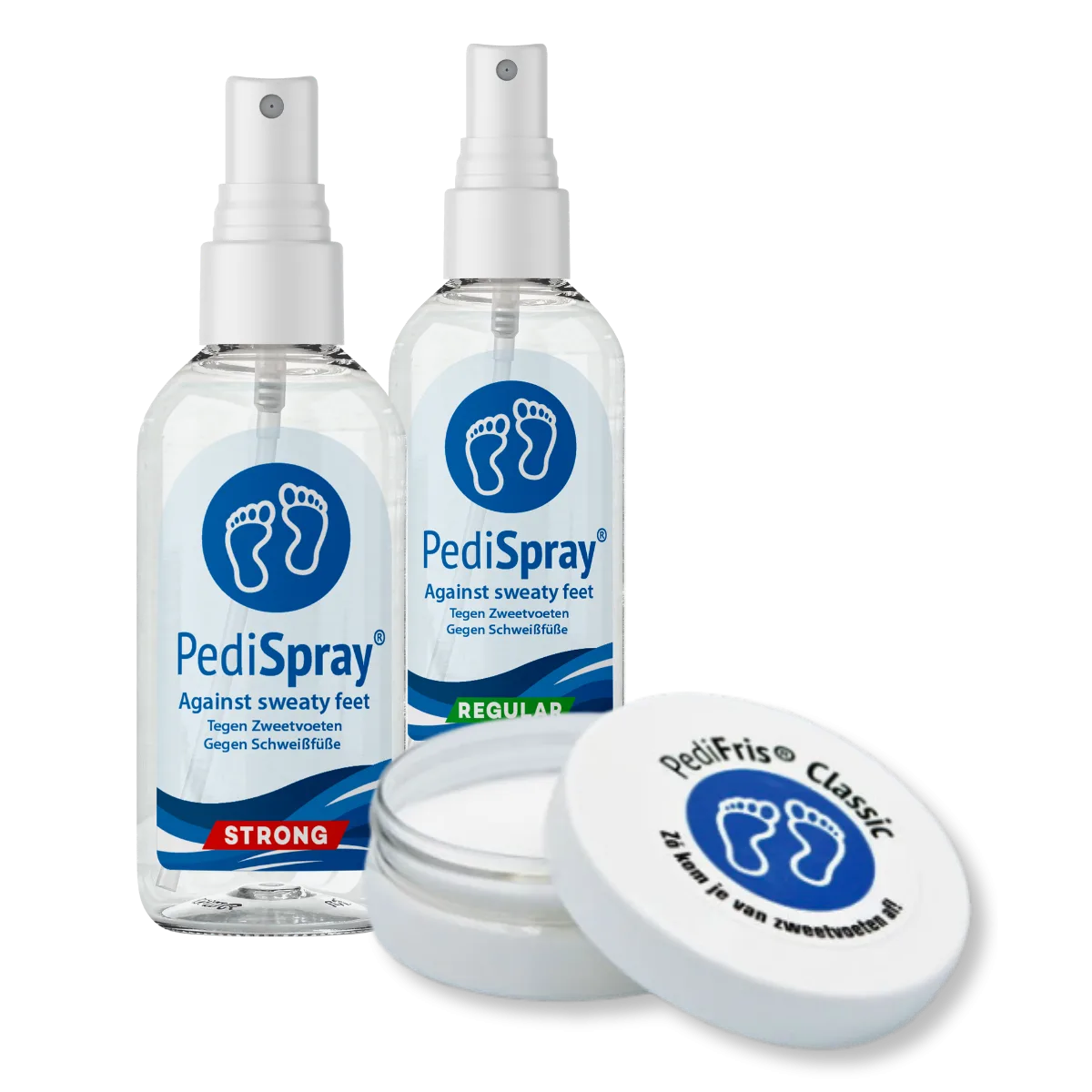
PediFris® eliminates the source of the symptoms — moisture and a warm environment inside the shoe: dry feet with PediSpray® and fresh shoes with PediFris® Classic powder help prevent athlete's foot, reduce symptoms, and prevent re-infection. In the event of an infection, use in combination with an antifungal treatment.
Frequently Asked Questions about Athlete’s Foot (Tinea Pedis): Symptoms and Treatment
Brief answers on recognising and treating the condition, and how it differs from related foot problems.
Athlete’s foot is a contagious fungal infection of the skin, usually between the toes or on the sole of the foot. The medical name is tinea pedis.
Athlete’s foot is often recognised by flaking, itching, redness, white, soft skin or painful cracks between the toes. Blisters or flaking on the soles of the feet may also occur.
Treat athlete’s foot with an antifungal skin treatment available from a chemist or pharmacy and follow the instructions for use fully. Also, keep your feet dry and wear clean socks every day.
Yes. Athlete’s foot can spread via skin flakes on floors, towels and in shared wet areas. Wear slippers and do not share towels or nail care tools.
Toenail cheese is a malodorous build-up under the toenail. Athlete’s foot affects the skin and more often causes itching, flaking, white, soft patches or cracks.
Pitted keratolysis causes small pits on the soles of the feet and is caused by bacteria. Athlete’s foot is a fungal infection and is often found between the toes.
PediSpray® helps to reduce excessive perspiration on the skin. PediFris® Classic supports hygiene in footwear. These products are not a substitute for antifungal treatment of the skin.
Written by Judith de Jong (Content owner, PediFris®). Medically reviewed by Sébastien Dequidt, podiatrist. Updated on 24 August 2026. We base our advice on foot care practice and on the medical sources listed below.
Worried about a persistent complaint, fungal nail, athlete’s foot or excessive sweating? Consult your GP, podiatrist or chiropodist.

.svg)