

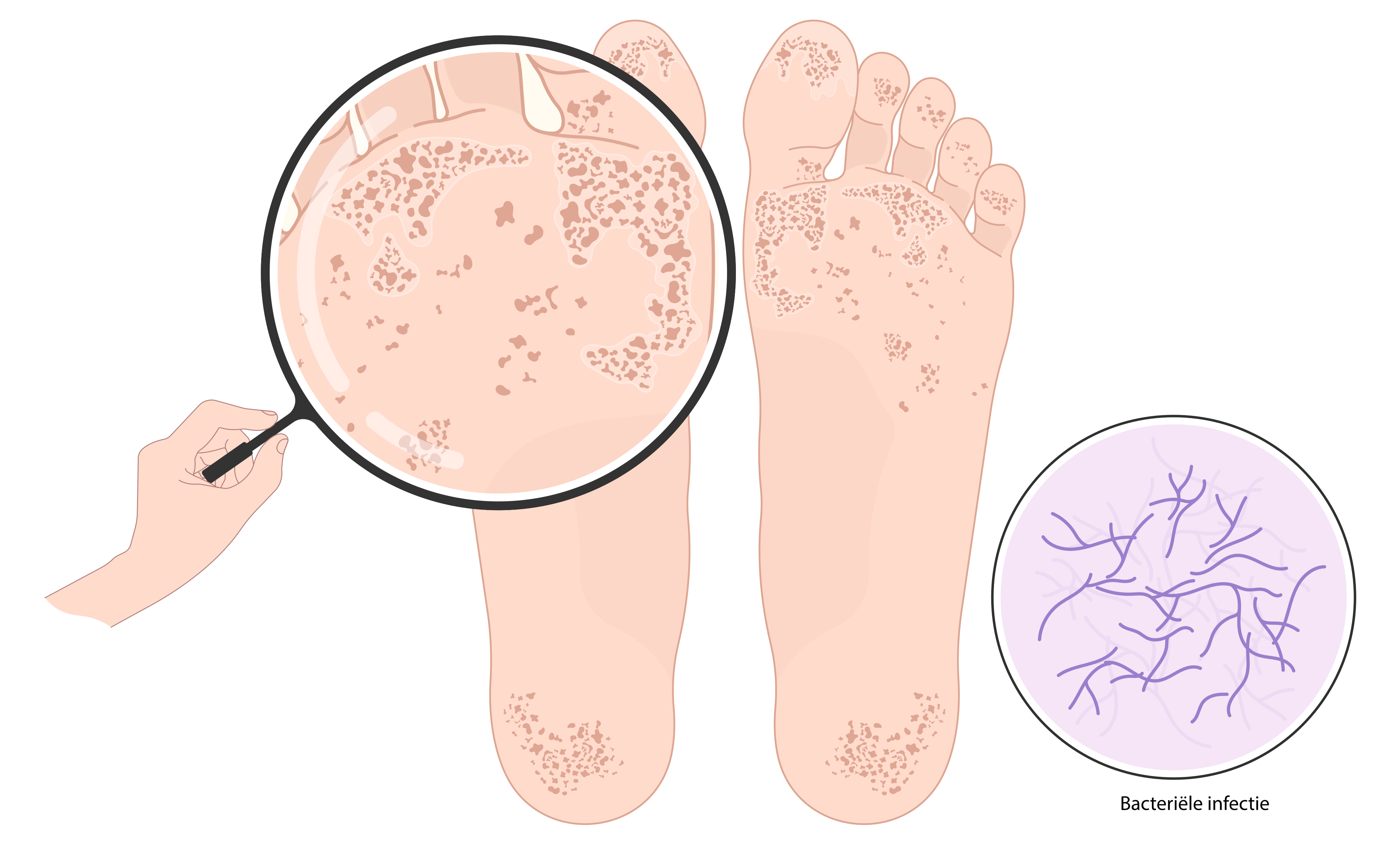
Pitted soles (Keratoma sulcatum): treatment and prevention
What to do about pitted soles?
Pitted soles are caused by bacteria 'eating' the callus layer of your feet in a warm, humid environment. To effectively treat and prevent pitted soles, follow this 2-step plan:
Kill the bacteria in your shoes:Sprinkle daily an antibacterial and fungicidal shoe powder (such asPediFris® Classic) in your shoes. This fights the bacteria that cause the pits and pungent smell.
Keep your feet dry:Use an anti-perspirant foot spray containing aluminium salts (such asPediSpray®) to stop excessive sweating. Without moisture, the bacteria cannot survive.
ℹ️Ensure good hygiene:Wash your feet daily with antibacterial soap, dry them very well (also between the toes) and only wear moisture-absorbing, breathable socks (wool or cotton).
What to do about pitted soles (Pitted Keratolysis)?
Do you suffer from an extremely strong smell of sweat, small craters or pits under your feet and soft, white-coloured skin? Chances are you are dealing with pitted soles (medical term:pitted keratolysis). This harmless but annoying bacterial skin infection is common, especially in people with sweaty feet. Fortunately, it is very well and relatively quickly treatable.
Many people are shocked when they discover the small holes in their callus layer, combined with a very penetrating sweat odour. However, the cause is simple: certain bacteria (such asCorynebacteria) flourish excellently on warm, sweaty feet.
Cause, symptoms and consequences of pitted soles
These bacteria produce enzymes that break down the keratin protein in your callus layer. The result?
The characteristic pits and the nasty smell. As long as your feet remain moist and the bacteria in your shoes survive, the condition will not disappear on its own.

The solution: PediFris® stops bacteria and sweat
Want to get rid of pitted soles fast and prevent them from coming back? Then a foot bath or an ordinary deodorant is not enough.
You need to break the vicious cycle with a targeted two-step approach: eliminate the bacteria in your shoes with PediFris® Classic shoe powder, AND take away their breeding ground (moisture) by keeping your feet bone-dry with PediSpray® foot spray. We tell you exactly how.
Stop bacterial growth in your shoes
Address the cause of pitted soles at the source.
Old bacteria in your shoes cause infections again and again. Break this circle immediately with our effective powder formula.
PediFris® Classic Shoe powder: banish the bacteria from your shoes
When treating pitted soles, the focus is often only on washing and anointing the feet. This is a major pitfall! This is because the bacteria that eat the holes in your callus layer and cause the extreme ammonia-like stench survive effortlessly in the lining of your shoes.
As long as you don't disinfect your shoes, you will continue to infect yourself every time you put them on.
WithPediFris® Classicshoe powder will get rid of these stubborn bacteria for good. This powerful spreading powder does not cover up the unpleasant smell with a layer of perfume, but actively kills off the pathogenic bacteria.
How to do this:Simply sprinkle half a teaspoon of powder into your shoes before putting them on. The powder soaks deep into the material, cleans your shoe from the inside out and stops your calluses from eating away.
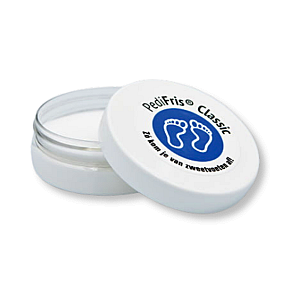
PediFris® Classic
- Neutralizes foot and shoe odor
- Fights bacteria and fungus
- No dirty fingers from cream mess
- 100% fresh all day with confidence
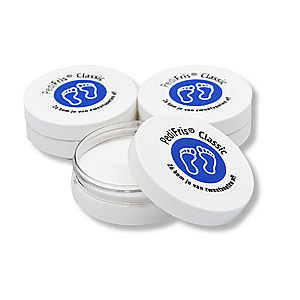
PediFris® Classic 3-Pack
- Neutralizes foot and shoe odor
- Fights bacteria and fungus
- No dirty fingers from cream mess
- 100% fresh all day with confidence
Take away the breeding ground of bacteria
No sweat means no pitted soles
Now that your shoes are bacteria-free, it's crucial to keep your feet bone-dry so that new bacteria don't stand a chance
PediSpray® Foot Spray: Dry Feet, Fast Recovery
Your shoes are now clean, but to cure and banish pitted soles for good, we need to prevent the bacteria from returning. We do this by taking away their favourite habitat: moisture and sweat! Bacteria need clammy sweaty feet to survive and multiply.
Where an ordinary deodorant only temporarily masks the stench, isPediSpray®A clinically proven antiperspirant. The high-quality aluminium salts in the spray safely calm overactive sweat glands. This instantly stops excessive sweating and allows the damaged callus layer (pits) to finally recover in peace. Without sweat, bacteria have nothing to live on, and without bacteria.... no smell and no pitted soles!
Application:Spray PediSpray® in the evening before going to bed on clean, dried feet. Pay special attention to the sole of the foot and areas where pits are visible. Use 4 to 6 pumps and allow skin to air dry completely.
Operation:After one application, your feet are guaranteed to stay dry for up to 5 days. Use it daily for the first week and then easily build up to once or twice a week as maintenance.
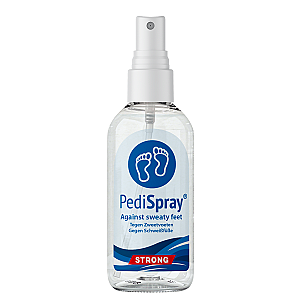
PediSpray® Strong
- Direct reduction of perspiration
- Extra strong, long lasting effect up to 5 days
- Without perfume — no smell masking
- 100% dry and fresh all day
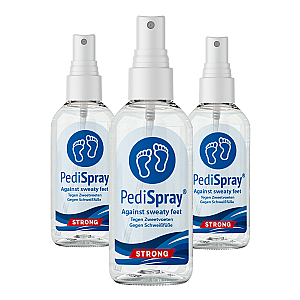
PediSpray® Strong 3-Pack
- Direct reduction of perspiration
- Extra strong, long lasting effect up to 5 days
- Without perfume — no smell masking
- 100% dry and fresh all day
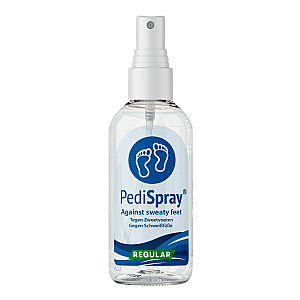
PediSpray® Regular
- Direct reduction of perspiration
- Extra strong, long lasting effect up to 5 days
- Without perfume — no smell masking
- 100% dry and fresh all day
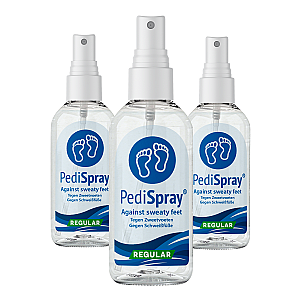
PediSpray® Regular 3-Pack
- Direct reduction of perspiration
- Extra strong, long lasting effect up to 5 days
- Without perfume — no smell masking
- 100% dry and fresh all day
Finally taking off your shoes again without a care in the world
No more shame, radiantly fresh feet anywhere, anytime
The Result: Restored Feet, Odour-free Shoes and No More Pits
Pitted soles can be extremely persistent if you only tackle half the problem. If you treat only your feet or only your shoes, you will continue to fight against the bias.
By using the golden combination of PediFris® Classic (to kill the bacteria in your shoes) and PediSpray® (to stop sweat on your feet), you break this vicious cycle once and for all. Your feet will have a chance to fully recover, the holes in your callus layer will disappear, the extreme smell will dissolve and you will enjoy healthy, dry feet and shoes every day.
In short
Are pitted soles contagious?
- Bacteria are naturally present: The bacteria responsible for pitted soles are normally found on everyone’s skin.
- Moisture and warmth are the triggers: If your feet are often warm and damp (for example, in closed shoes), this provides an ideal environment for these bacteria to multiply rapidly.
- The skin is affected: Under these conditions, the bacteria produce substances that damage the top layer of skin, resulting in the characteristic dimples.
How fast does the treatment against pitted soles work?
- Rapid odour reduction: As PediFris® Classic tackles the odour-causing bacteria directly and PediSpray® reduces sweat production, the unpleasant odour will quickly diminish.
- Less visible dimples: The dimples on the soles of your feet will gradually become shallower and less visible as the bacterial infection is brought under control and the skin heals.
Can children get pitted soles?
- Excessive sweating: Some children are naturally more prone to sweaty feet.
- Damp shoes from playing: Children are often playing outdoors and get wet feet, meaning they walk around in damp shoes for long periods. This creates an ideal environment for bacteria to thrive.
- Wearing shoes for long periods: During school days, children often wear their shoes for long periods at a time. This, combined with less breathable shoes, can lead to a warm and damp environment inside the shoe, which increases the risk of pitted soles.
Home remedies: what to do for pitted soles according to 'Grandma Knows'
- Vinegar bath: Mix vinegar with water and soak your feet to kill bacteria.
- Baking soda: Apply a paste of baking soda and water to the affected areas. This absorbs moisture and kills bacteria.
How to prevent pitted soles
- Ventilate your shoes: Wear breathable materials such as leather.
- Rotate your shoes: Allow shoes to dry for at least 24 hours.
- Clean socks: Put on dry, clean socks every day, preferably made of cotton or wool.
- Hygiene: Wash your feet daily with mild soap and dry them thoroughly, especially between the toes.
Are pitted soles dangerous?
- Skin irritation and discomfort: The constant moisture and bacterial activity can lead to skin irritation, redness and a burning sensation.
- Increased risk of other infections: The damaged and softened skin is more vulnerable. This can increase the risk of other foot problems such as athlete’s foot or bacterial skin infections that can go deeper.
- Painful patches: Sometimes the dimples can merge into larger patches, which can be more painful, especially on pressure points of the feet.
Should I go to the doctor with pitted soles?
- Your symptoms persist or worsen: If the dimples do not improve, become more painful, or spread, even after several weeks of home treatment.
- There is severe skin irritation or inflammation: If your feet become very red, swollen or inflamed, medical advice is required.
- You have diabetes or poor circulation: People with these conditions should take extra care with foot problems, as minor infections can quickly lead to more serious issues.
- You are unsure of the diagnosis: If you suspect it is something other than plantar warts, your GP can make a correct diagnosis.
.svg)
 Linda Boertje
Hans Van De Weijdeven
John Termeer
Linda Boertje
Hans Van De Weijdeven
John Termeer
 Andre Paredis
Dmitry Vakulich
Dirk Pot
John Martin
Conny Nooten
Amanda Davenpoort
Norbert Kampschulte
Andre Paredis
Dmitry Vakulich
Dirk Pot
John Martin
Conny Nooten
Amanda Davenpoort
Norbert Kampschulte
|
|
Our Expertise and Scientific SourcesThe content on this page has been compiled with the utmost care and is backed by our expertise in the field of foot care. We base our advice and recommendations on current scientific insights and guidelines from leading national and international health organisations. For further reliable information, please also refer to: |
