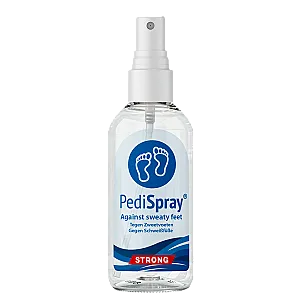


PediSpray® Regular
Direct reduction of perspiration
You know that smell. After training or a match, you open your sports bag and it hits you straight away: sweat, wet grass, a musty odour. Often, the boots have been left there until the next time. Sometimes it’s a real stinker: football boots that reek of cat wee.

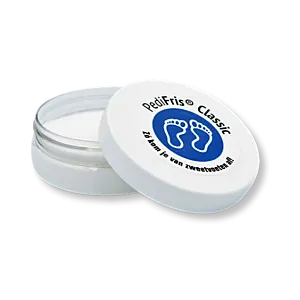
PediFris® Classic in the shoe plus PediSpray® on the skin form a good combination.

Sweat, wet grass and synthetic linings trap bacteria for hours inside closed trainers. Airing them out, removing the insoles and letting them dry helps, but as long as moisture cannot escape, or you only use odour-masking products, the source of the problem remains.
The correct order: first apply powder where it will stay in place, then reduce sweating on the skin, then air the shoes. Machine washing often damages the adhesive and leather more quickly than you might think.
Do your feet and socks quickly get wet when playing football? This repeatedly introduces moisture into your football boots.
Apply PediSpray® antiperspirant to clean, dry feet to reduce excessive sweating. Treat the boots with PediFris® Classic as well to combat bacteria and fungi in the lining.
Powder in the shoe, spray on dry feet, and then remove from the bag.
Sprinkle PediFris® Classic into your football boots after the match. The powder remains in closed footwear and tackles micro-organisms, rather than simply masking odours with perfume.
Apply PediSpray® (Regular or Strong) to clean, dry feet before training. Less sweat means less moisture in warm, damp trainers.
Take your shoes out of your sports bag straight away. Remove the insoles if possible, and allow them at least 24 hours to dry. Switch to a different pair if you play several times a week.
.svg)
 Naim Acharcaui
Sandra Kitschmer
Naim Acharcaui
Sandra Kitschmer
 Marjan Kramer
Stanko Radoslaw
Berge
Dirk Pot
mart slaats
BK
G.W.
Jan henk Crouwers
Marjan Kramer
Stanko Radoslaw
Berge
Dirk Pot
mart slaats
BK
G.W.
Jan henk Crouwers
Synthetic linings, wet grass and heavy sweating turn trainers into a greenhouse. Fresh sweat has hardly any smell; the pungent, cat-urine-like odour only develops once bacteria break down that moisture.
Home remedies (freezer, bicarbonate of soda, newspapers) can sometimes reduce odour. They do not inhibit your sweat glands and do not always kill the bacteria. That is why the odour returns without powder and spray.
PediFris® Classic remains in tight-fitting football boots: exactly where bacteria cause odours. PediSpray® also reduces perspiration on the skin, so that less moisture enters the boot.
Do your feet remain soaking wet, or do you notice cracks, athlete’s foot or open sores? Have them checked, especially if you have diabetes. Extreme excessive sweating sometimes requires medical advice. More:what to do about sweaty feet en Thuisarts.nl on excessive sweating.
Ready to tackle odour at source? Start with PediFris® Classic in your football boots and top up with PediSpray® on dry feet.
From “football boots smell of cat wee” to powder, spray and airing: answers that match how people search.
Sprinkle PediFris® Classic into the shoes to tackle bacteria. Use PediSpray® on dry feet to reduce sweating. Then leave the pair to air out; do not store them in a sealed bag.
That pungent, cat-urine-like odour often arises when bacteria break down sweat in warm, damp trainers. Wet grass, synthetic linings and a sports bag exacerbate the problem. Classic in the shoe + Spray on the skin tackle both the source and the moisture.
Sometimes, but not always, safe for leather, glue or studs. Better options: air the shoes, let them dry, use powder inside the shoes and minimise sweating on the skin. Follow the manufacturer’s advice if you do wash them.
Yes, that’s what it’s designed for. In closed trainers, the powder remains inside the shoe and tackles bacteria at the source. After use, sprinkle it into a dry pair and leave the powder to work for a while.
Recommended. Classic tackles bacteria in the shoe; Spray reduces sweat production on the skin. Together, they reduce both the source of odour and moisture build-up.
In cases of pain, signs of infection, diabetes, or extreme excessive sweating. See what to do about sweaty feet and Thuisarts.nl.
Let your football boots dry completely after every training session and take them out of your sports bag straight away. Use PediSpray® on your feet to reduce excessive sweating and PediFris® Classic in your football boots to combat bacteria and fungi in the lining.
Written by Judith de Jong (Content owner, PediFris®). Medically reviewed by Sébastien Dequidt, podiatrist. Updated on 12 August 2026. We base our advice on foot care practice and on the medical sources listed below.
Worried about a persistent complaint, fungal nail, athlete’s foot or excessive sweating? Consult your GP, podiatrist or chiropodist.

.svg)