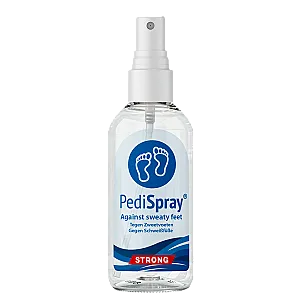


PediSpray® Regular
Direct reduction of perspiration
You can tell if your feet are sweating in work shoes by clammy feet, wet socks and a damp lining after a long shift. If that moisture remains trapped in the shoe, your work shoes may also start to smell.
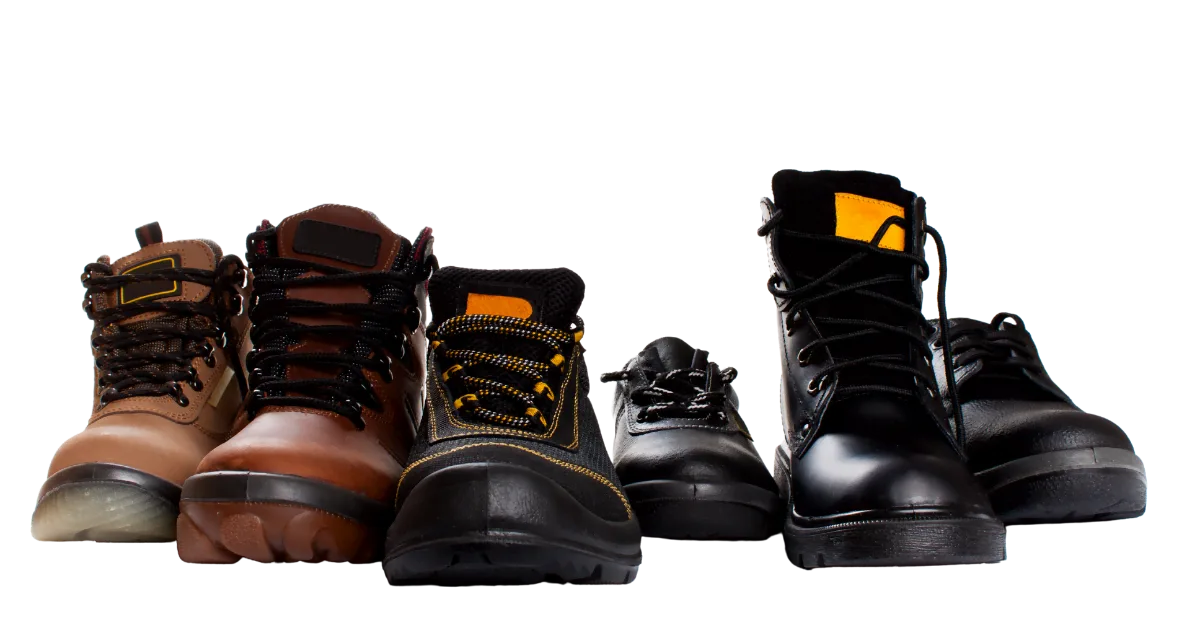
Therefore, when referring to sweating on the skin, start with PediSpray®. Then keep the shoe dry and fresh with PediFris® Classic. This ensures that every aspect of the problem is addressed in a targeted manner.
What to do about sweaty feet It does not depend solely on the footwear. If you experience problems with several types of shoes, start with the general routine for skin, socks and shoes.

Sweaty feet in work shoes are more likely to occur during long shifts in closed work or safety footwear. Heat builds up around your feet, your socks become damp and the lining has little time to dry.
Breathable socks and ventilated materials help wick away moisture, but do not reduce perspiration on your skin. If the inside of the shoe remains damp, bacteria can multiply and work shoes will start to smell.
Therefore, treat the sweaty feet first and then pay attention to the work shoes as well. This way, you tackle both wet feet and lingering shoe odour.
Start with dry feet, clean work socks and shoes that allow the feet to breathe. If your feet do get wet quickly, focus first on reducing perspiration on the skin and then on moisture and odour inside the shoe.
Apply PediSpray® Regular or Strong to clean, dry feet. This antiperspirant helps to reduce the amount of sweat on the treated skin, so that your feet stay dry for longer in closed work shoes.
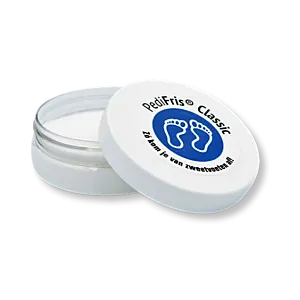
Sprinkle PediFris® Classic into dry work shoes. The powder combats bacteria and fungi in the shoe and helps to reduce moisture and odour in the lining.
Ideally, change your pair of work shoes daily, put on clean work socks every day, and remove any loose insoles from your shoes after your shift. Allow worn work shoes sufficient time to dry completely.
PediSpray® targets foot perspiration. PediFris® Classic is then used in work shoes to combat moisture, bacteria, fungi and recurring shoe odour.
Within the safety requirements of your job, choose a well-fitting pair of shoes with as much ventilation as possible. Wear work socks that wick away moisture and, for very long or hot shifts, bring a clean spare pair of socks with you.
After use, leave work shoes to dry open and remove any loose insoles. Wash your feet daily and dry them thoroughly, including between the toes. A freezer or deodorant will not affect the amount of sweat on your feet.
A spray for sweaty feet is applied to the skin. PediSpray® is a fragrance-free antiperspirant that helps reduce excessive sweating. PediFris® Classic is used inside the shoe, where it combats the bacteria and fungi that contribute to shoe odour.
On the skin: PediSpray® Regular or Strong. In work shoes: PediFris® Classic. This ensures that both the primary complaint – sweaty feet in work shoes – and the secondary complaint – smelly work shoes – are addressed separately.
If symptoms persist despite proper care, or if you notice open sores, athlete’s foot or excessive sweating, have this checked, particularly if you have diabetes. More:what to do about sweaty feet en Thuisarts.nl.
Start with sweaty feet on the skin: PediSpray® on clean, dry feet. Then use PediFris® Classic in dry work shoes to combat damp and odours.
Short answers to frequently asked questions about sweaty feet, wet socks and sweat odour in work and safety footwear.
Minimise moisture on the skin, wear clean, moisture-regulating socks and allow any work shoes you have worn to dry completely before putting them on again. If your feet continue to get wet quickly, PediSpray® antiperspirant helps to reduce the amount of sweat on the treated skin.
Well-fitting work shoes with as much ventilation as possible are usually the most comfortable if you are prone to sweaty feet during a long working day. Always choose footwear that meets the safety requirements of your profession; even a breathable style does not completely prevent perspiration.
A combination of reduced sweating on the skin, dry socks and sufficient drying time for your work shoes is most effective during long shifts. Therefore, treat your feet first and only then put on completely dry socks and work shoes.
First allow smelly work shoes to dry completely, remove any loose insoles and then treat the inside where moisture and the smell of sweat linger in the lining. PediFris® Classic combats bacteria and mould inside the shoe and helps to reduce recurring shoe odour.
Closed-toe work and safety shoes are less effective at wicking away heat and moisture, meaning sweat remains on the skin and in the socks for longer. During a long or hot shift, change into clean, dry work socks halfway through if necessary.
Contact your GP if you have open wounds, pain, skin abnormalities, diabetes or sweating that clearly interferes with your work and daily life. Thuisarts explains when excessive sweating is a reason to seek medical advice.
Written by Judith de Jong (Content owner, PediFris®). Medically reviewed by Sébastien Dequidt, podiatrist. Updated on 18 August 2026. We base our advice on foot care practice and on the medical sources listed below.
Worried about a persistent complaint, fungal nail, athlete’s foot or excessive sweating? Consult your GP, podiatrist or chiropodist.

.svg)