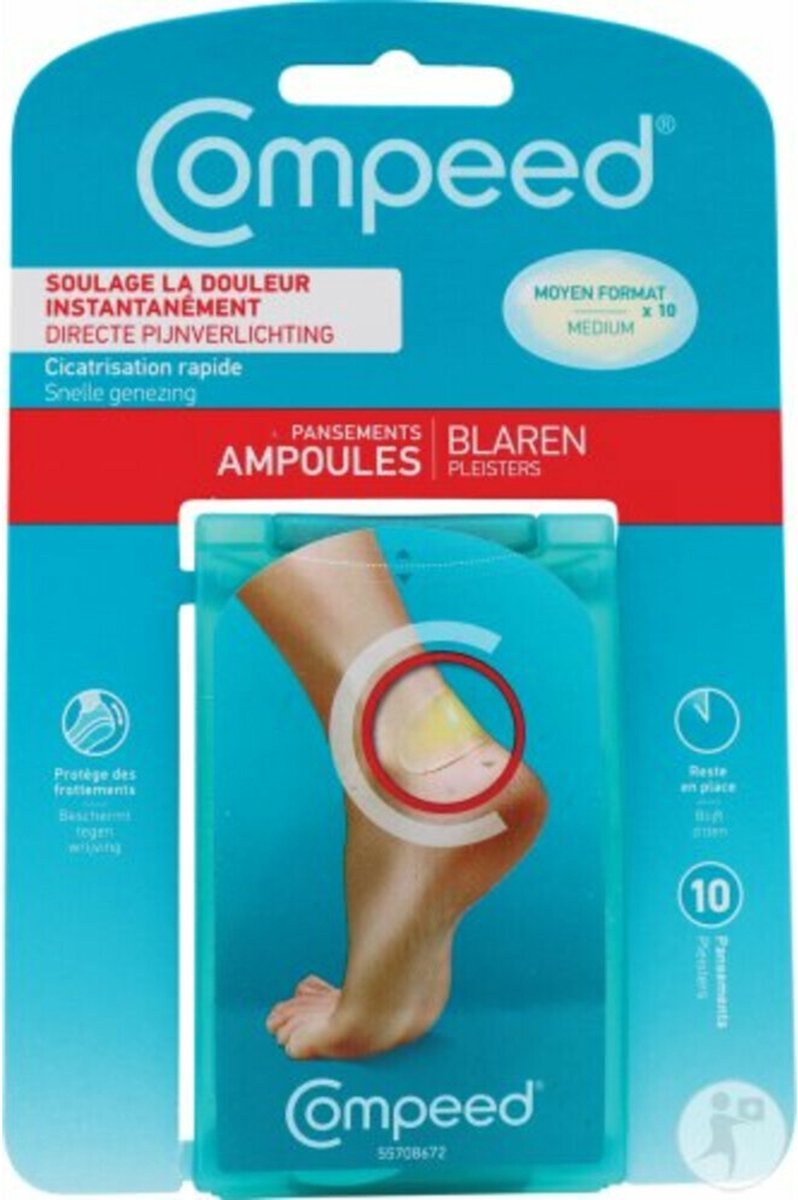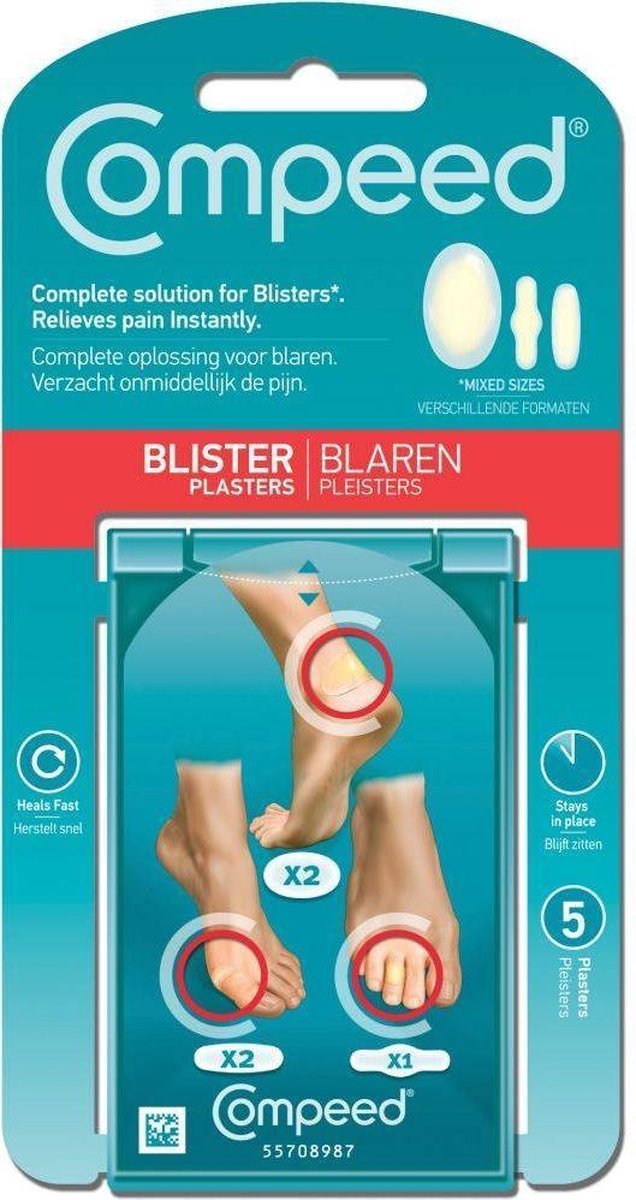
A foot blister is caused by friction and pressure on the skin. This can happen if your shoes don’t fit properly or if you walk a lot. Foot blisters can be very painful and difficult to prevent. Fortunately, there are a number of things you can do to reduce the chance of blisters.
For a developing blister, you can temporarily shield the damaged skin or blister with a blister plaster. If the blister is already advanced, you can clean it and the surrounding area with running water or disinfectant.
If you have contracted one or more blisters, it is important to take good care of them.
Preferably not, try to keep a blister intact for as long as possible. A blister is a natural protection mechanism that helps prevent infection. So preferably keep a blister closed for a faster blister healing time
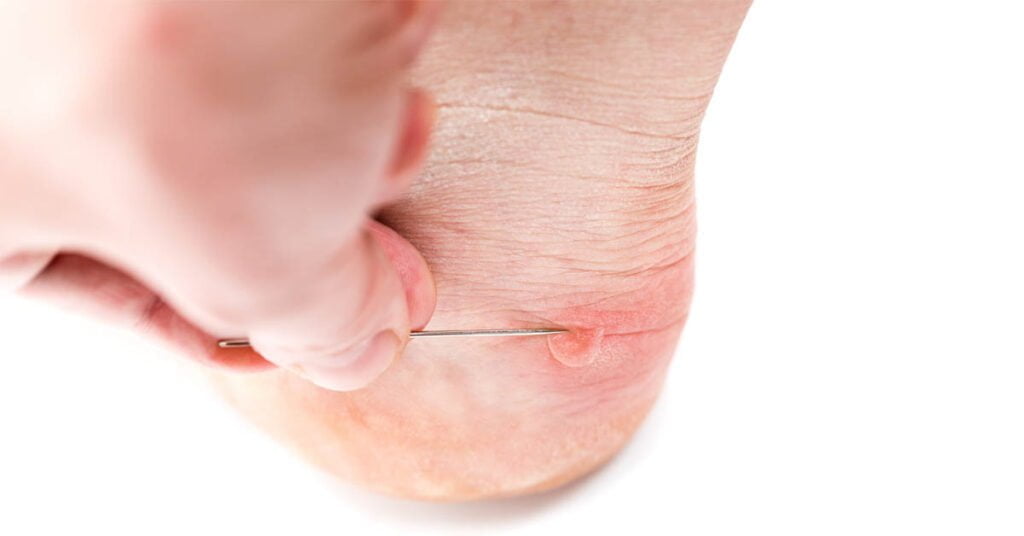
If a blister is painful and causes swelling, it may be necessary to prick it in some cases. If so, proceed as follows:
Cover the blister with a wound plaster or a sterile non-adhesive compress and secure this compress with an adhesive plaster or fixation plaster.
Is the blister open? Then clean the wound and cover it with sterile bandage or a plaster. Make sure the bandage is well over the blister, there are no creases in it and it cannot slide. The bandage can be replaced after a day.
Has the blister burst open? Then clean it and use sterile scissors to cut away the loosened skin. Then clean the wound well and cover it with sterile bandage or a protective wound plaster.
Make sure the bandage is well over the blister and cannot shift, as this can cause an unsightly wound. Replace the bandage daily to prevent infection
Feel a blister coming up. Then try to tape it off as soon as possible with a blister plaster and, if possible, wear other shoes.
Preventing foot blisters often starts with wearing shoes that provide the right size and support. Choose shoes with a good fit, that cover your foot and do not pinch or drag.
Avoid thin socks or other materials that cause pressure or friction – rather opt for thicker fabrics such as cotton or wool.
Make sure feet are dry. Wet feet skin is vulnerable and susceptible to blisters. So if you suffer from sweaty feet, use an anti-perspirant such as PediSpray®
An old and well-known remedy is Camphorated spirit. Camphorated spirit makes the skin of your feet a bit harder, making it more resilient and reducing the chance of blisters.
PediSpray® contains camphor, which helps to strengthen the skin. Another extra reason to use this product preventively
Make sure your shoes stay dry by airing them well after each use. If you do get foot blisters, make sure you keep them clean regularly to prevent infection.
If you are in pain, try applying a plaster to reduce irritation. And if you walk or stand a lot, take regular breaks to help relieve the pressure on your feet!
Put on your new shoes with your thickest pair of socks and heat the pinching spots with a hair dryer. These spots cause friction, which can cause blisters. Keep the shoes on until they have cooled down completely.
The heat causes the material to expand in the tight spots, so your new shoes suddenly fit like a glove.