

Athlete's foot (Tinea pedis): symptoms and treatment
Plantar wart: cause (HPV), symptoms, treatment, and how to prevent. Self-care or see the GP.
Plantar Wart – What to Do?
A plantar wart (verruca plantaris) is a hard, rough, round growth on the sole of the foot. Caused by the human papillomavirus (HPV). Contagious in moist environments such as swimming pools and gyms. Here you can read about symptoms, treatment, and prevention.
Symptoms and Cause
Pain or discomfort when walking or standing, especially on pressure points. Sometimes black dots in the centre (blood vessels). HPV enters through cuts or scrapes. Not everyone who comes into contact gets a wart – the immune system plays a role.

Treatment
Self-care: wart remover with salicylic acid. If that doesn't work: GP or dermatologist for freezing (cryotherapy), electrosurgery, or laser therapy.
Prevention
Wear waterproof sandals in public moist areas. Do not share towels or shoes. Keep feet clean and dry. Strengthen your immune system with healthy nutrition, exercise, and sufficient sleep.
```
Product recommendation
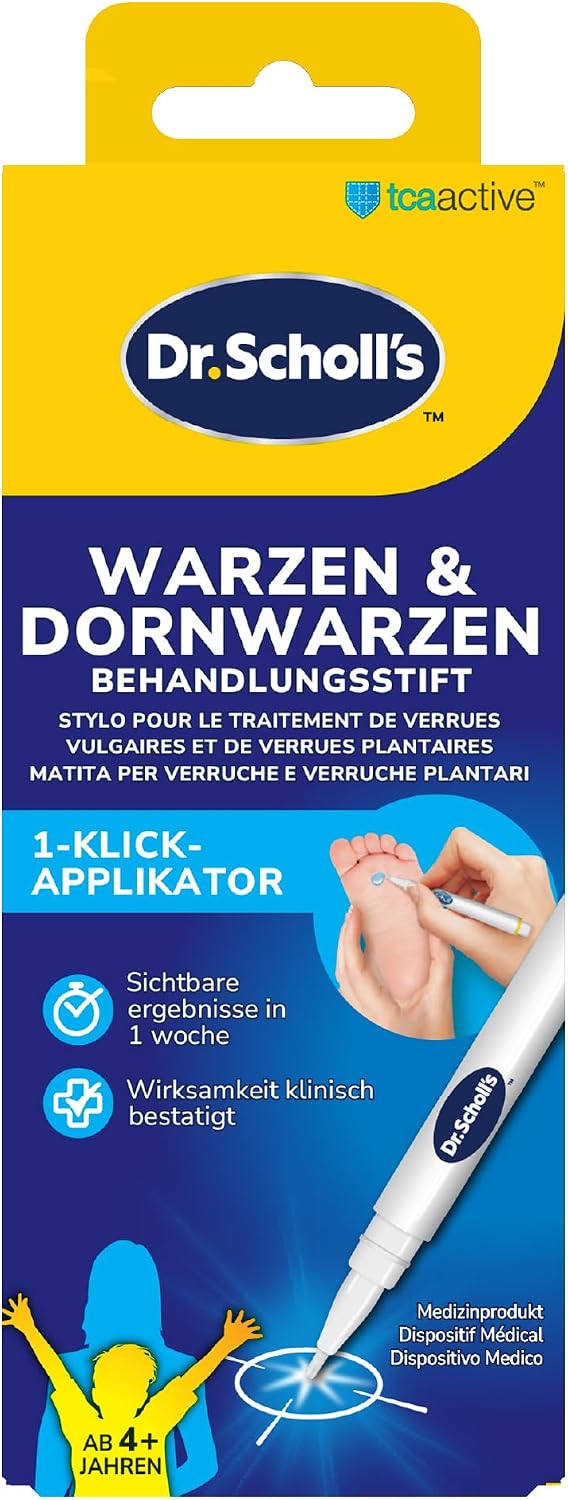
Scholl Wart Treatment Pen (Hands & Feet)
Same clinically proven pen for warts on hands and feet. Visible results in about 1 week with precise application.Frequently Asked Questions About Plantar Warts
Answers about plantar warts, treatment, and prevention.
How can I prevent plantar warts?
```html
Wear sandals in swimming pools and gyms. Do not share towels or shoes. Keep feet clean and dry. Strengthen your immune system.
```What is a plantar wart?
```html
A plantar wart is a hard, rough growth on the sole of the foot, caused by HPV. Contagious in swimming pools and gyms. Sometimes with black dots in the centre.
```How do I treat a plantar wart?
Self-care with salicylic acid-containing wart remover. If that doesn't work: GP or dermatologist for freezing or other treatment.
.svg)
 Berge
Berge
★
★
★
★
★
23 Sep. 2026
"Works brilliantly; no more wet feet after a week. "
Translated
Dirk Pot
★
★
★
★
★
22 Sep. 2026
"I’ve been using it for years to my complete satisfaction – it’s a top-quality product."
Translated
mart slaats
★
★
★
★
☆
21 Sep. 2026
"Delivered on time. The effect could be a bit stronger. I was previously prescribed something similar..."
Translated
BK
★
★
★
☆
☆
17 Sep. 2026
"I do have moments when I still sweat quite a lot without exertion. It does get wet, so unfortunately..."
Translated
 G.W.
G.W.
★
★
★
★
★
16 Sep. 2026
"SUPER product!‼️
It does exactly what it promises!👍
Very fast delivery..👍"
Translated
Jan henk Crouwers
★
★
★
★
★
15 Sep. 2026
"I’ve been using this product for years; it works very well against odour, and the powder helps with..."
Translated
Thomas De Jager
★
★
★
★
★
07 Sep. 2026
"Really effective stuff.
Dispatched quickly in a letterbox parcel.
Brilliant!"
Translated
Roger Schmidt
★
★
★
★
★
30 Aug. 2026
"The product works brilliantly, ordering it was easy, but delivery took longer than usual. That’s why..."
Translated
Wicher
★
★
★
★
★
29 Aug. 2026
"Fantastic products! Finally, no more pitted soles. "
Translated
IdKvH
★
★
★
★
★
24 Aug. 2026
"Fast delivery, does what it promises"
Translated
|
|
The texts on this page have been carefully compiled. Sources used include: Thuisarts – warts and Huidarts – warts. |
