
What can be done about sweaty feet? Causes and solutions.
What can be done about sweaty feet? Start with dry feet, clean socks, and shoes that allow proper ventilation. If moisture keeps returning, an antiperspirant can temporarily reduce sweat production. Also, tackle the moisture and bacteria in your shoes.
You can do this straight away today.
Wash your feet every day. and dry carefully between the toes.
Put on clean socks every day. which wick away moisture, for example, made from merino wool or a technical fibre blend.
Alternate your shoes. and allow each pair at least 24 hours to dry completely.
Remove the insoles from the shoes. so that the inside can also breathe properly.
Carefully remove excess calluses. A thick, moist stratum corneum provides extra space for bacteria.
If feet remain wet, use an antiperspirant. on clean, completely dry skin.
Seek medical advice. In cases of sudden or excessive sweating, pain, sores, skin abnormalities, or diabetes.
Tackling sweaty feet
Sweaty feet are caused by excessive sweating and the bacteria that thrive on damp skin and inside your shoes. What can you do? Tackle it from two angles: reduce sweating on the skin and keep your shoes dry and fresh.
Reduce sweating on the skin
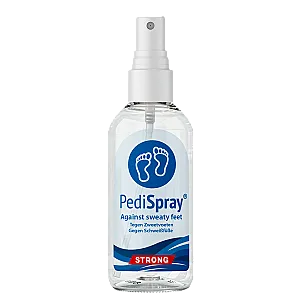
Use an antiperspirant foot spray. PediSpray® (Strong or Regular) soothes overactive sweat glands and keeps your feet dry. Apply in the evening to clean, dry feet, and then gradually reduce usage for maintenance.
Keep your shoes dry and fresh
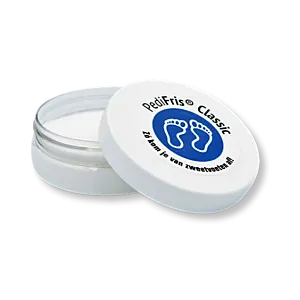
Sprinkle PediFris® Classic powder into your shoes. It targets bacteria and fungi in the shoe lining and keeps the inside of the shoe dry, so odours don’t stand a chance.
Perseverance and prevention
Use the spray and powder daily. This will keep your feet and shoes dry and prevent sweaty feet and odour from returning.
What can be done about sweaty feet? This helps straight away.
Sweat itself is virtually odourless. The familiar foot odour mainly arises when bacteria break down sweat and skin flakes in a warm, damp environment. That is why a combination of measures works best: keep the skin as dry as possible, limit bacterial growth, and allow socks and shoes sufficient time to dry.
Feet: Wash daily, dry thoroughly, and do not put on closed shoes immediately afterwards.
Socks: Change daily; on days involving heavy sweating at work or during sport, change in between as well if necessary.
Shoes: Alternate, remove the insoles and leave them to dry for at least 24 hours.
Excessive sweating: An antiperspirant can temporarily reduce sweating; always follow the instructions for use and do not apply it to damaged skin.
Why do you get sweaty feet?
The soles of your feet contain a great many sweat glands. These help with cooling and grip but can produce more moisture due to heat, exertion, stress, hormones, or genetic predisposition. Tight shoes, synthetic socks, and wearing the same pair of shoes every day then trap that moisture.
If your feet are constantly soaked, even without exposure to heat or physical exertion, this may indicate excessive sweating (hyperhidrosis) Discuss sudden, extreme, or daily debilitating sweating with your GP.
Sweaty feet and smelly feet are not exactly the same.
With sweaty feet, moisture is the key factor.smelly feet The focus is primarily on the odour caused by bacterial breakdown. You can therefore have wet feet without a strong odour, or, conversely, a persistent shoe odour while your skin feels dry at that moment. Reducing moisture helps in both cases, but where odour is concerned, the shoe lining must also be allowed to dry thoroughly and remain clean.
A practical routine for dry feet and shoes.
In the morning
Put on clean, completely dry socks.
Choose a dry pair of shoes and, if necessary, remove any damp insoles.
Use only products suitable for feet or shoes and follow the instructions for use.
After work, exercise, or coming home
Take off damp socks immediately and wash and dry your feet.
Open the shoes, remove the insoles, and leave everything to dry at room temperature.
Preferably, do not wear the same pair again until they are completely dry.
In the evening
Apply a anti-perspirant foot spray Apply only to clean, completely dry, and intact skin. Applying it in the evening is often practical, as the product can then dry undisturbed. Do not use the product more frequently than stated on the label.
Which socks and shoes help?
Choose socks that wick moisture away from the skin and dry quickly. Merino wool and technical sports or work socks are often more suitable than thick cotton, which absorbs a lot of moisture but can remain wet for a long time. The fit is also important: shoes that are too tight restrict ventilation, whilst shoes that are too loose cause extra friction.
Socks: moisture-regulating, a good fit, and kept clean every day.
Shoes: breathable upper, removable insole, and sufficient space around the toes.
Variations: Use at least two pairs if you wear closed-toe work or sports shoes every day.
Please also read our specific advice on the best socks for sweaty feet,sweaty feet in work shoes,sweaty feet in sandals en sweaty feet in flip-flops.
What does help, albeit temporarily or only to a limited extent?
Good hygiene and drying: Always form the basis and reduce moisture and bacterial growth.
Antiperspirant: can temporarily reduce sweat production and is different from a deodorant, which mainly masks odour.
Shoe powder: can help to keep the environment inside shoes drier and fresher, but is no substitute for drying and rotating shoes.
Talcum powder: temporarily absorbs moisture but does not inhibit sweat production.
Vinegar or bicarbonate of soda: are often mentioned as home remedies, but their effect on sweating is limited, and sensitive or damaged skin may become irritated.
Foot deodorant: It can reduce odour, but does not automatically make excessively sweaty feet drier.
Is the sweating persistent? Treat both the skin and the shoes.
In cases of persistent sweaty feet, washing alone is usually insufficient. Where possible, reduce sweating on the skin while at the same time preventing moisture from accumulating in the shoe lining.
Use a suitable product for the skin.spray for sweaty feet In addition, keep your shoes dry and fresh with good ventilation by changing them regularly and, if necessary, using a remedy for sweaty feet and shoe odour This combination targets both areas where moisture and odour can accumulate.
When should you see your GP, podiatrist, or chiropodist?
Seek professional advice if self-care is not helping sufficiently or if your symptoms change suddenly. Contact a healthcare professional sooner if you experience pain, open sores, inflammation, loss of sensation, or have diabetes.
Your feet are constantly soaking wet, and the sweating interferes with work, sport, or social situations.
The sweating began suddenly, also occurring at night or affecting the whole body.
You may notice itching, flaking, cracks, or white, softened skin, which may be consistent with athlete's foot.
You can see small pits and smell a strong odour, which may be consistent with pitted keratolysis.
You have diabetes, poor circulation, or reduced sensation in your feet.
Your GP can assess whether the condition is hyperhidrosis or has another cause. A podiatrist, chiropodist, or medical pedicurist can help with pressure points, calluses, footwear, and an appropriate daily foot care routine.
Summary: how to tackle sweaty feet
Keep your feet clean and dry, wear clean, moisture-regulating socks every day, alternate your shoes, and allow them to dry completely. If sweating persists, you may use a suitable antiperspirant on intact skin. If your feet remain extremely wet or you develop skin problems, have the cause assessed by a professional.
How to treat sweaty feet yourself
Combine the PediSpray® foot spray (reduces sweat on the skin) with the antibacterial PediFris® Classic powder (for fresh, dry shoes). Together, they tackle both the causes of sweaty feet and the odour.
Frequently asked questions about sweaty feet.
Answers regarding causes, what helps, pitted keratolysis, home remedies, odours in shoes, and when to seek medical advice.
What are sweaty feet and how do they develop?
Sweaty feet means that the soles of your feet (and sometimes the instep) produce more sweat than is necessary for cooling. There are a great many sweat glands on the soles of the feet; the figure often cited is 250,000+ glands per foot.
Common factors: heredity, stress, heat, sport, tight or non-breathable shoes, and synthetic socks. Fresh sweat itself has hardly any smell; an unpleasant odour mainly develops when moisture remains in socks and shoes for a long time and bacteria and fungi break down the sweat. You can read more about smelly feet, foot odour and smelly shoes on our separate pages.
What helps with sweaty feet?
The best approach is to combine two steps: less sweat on the skin and fewer bacteria in your shoes.
- On the skin: PediSpray® antiperspirant.
- In your shoes: PediFris® Classic.
Complement this with thorough drying, breathable socks, and allowing your shoes to air for 24 hours.
What complications are associated with chronically wet feet (such as toenail fungus and athlete's foot)?
If your feet and shoes remain wet and warm for long periods, this creates ideal conditions for fungi and bacteria:
- Athlete’s foot (tinea pedis): itching, flaking, sometimes cracks between the toes, often made worse by moisture.
- Toenail fungus: thickened, yellowed or brittle nails; may occur alongside athlete’s foot due to the same damp environment.
Manage sweating and maintain good hygiene (less moisture on the skin + clean, dry shoes) to prevent these problems or to support treatment alongside any antifungal medication.
What are pitted soles and what do they have to do with smelly feet?
Pitted keratolysis (pitted keratolysis / keratoma sulcatum) are small pits in the skin of the sole of the foot, often near the heel or ball of the foot, sometimes accompanied by a sour or pungent odour. It is caused by bacteria that break down the skin in damp conditions.
Prolonged sweating and shoes that do not dry out are among the risk factors. Management: keep feet dry, allow shoes to air out, limit the use of synthetic materials and, as with sweaty feet, regulate perspiration on the skin and maintain good footwear hygiene.
What is the difference between foot deodorant and antiperspirant?
A foot deodorant mainly masks odour with perfume; the amount of sweat and moisture in your shoes remains largely the same.
An antiperspirant (including for the feet) is designed to temporarily reduce sweat production, thereby keeping the surface less clammy. For people with damp feet, applying this to the skin is often the most important step alongside good hygiene and wearing dry shoes.
Do bicarbonate of soda, vinegar, or other home remedies help with sweaty feet?
Bicarbonate of soda or vinegar is sometimes used to mask odours or degrease surfaces; this may provide short-term relief. They do not structurally inhibit sweat production by your sweat glands and are no substitute for a regular routine involving suitable foot care products and shoe hygiene.
For noticeable improvement that lasts all day, using an antiperspirant on the feet combined with good footwear hygiene is generally more reliable than home remedies alone.
Why do my shoes smell of ammonia or “cat wee”?
Certain strains of bacteria in a damp, poorly ventilated shoe can break down sweat into substances that smell of ammonia, often described as a “cat’s urine” odour. This odour can permeate the lining.
Reducing moisture (less sweat on the skin + allowing shoes to dry thoroughly) and using products designed to tackle bacteria in footwear (such as PediFris® Classic) help to combat this type of odour. See also tips for dealing with smelly shoes.
Are sweaty feet contagious?
Excessive sweating in itself is not a contagious condition: it is a function of your sweat glands and factors such as heat and stress.
Please note: a permanently damp environment inside the shoe increases the risk of fungal infections (such as athlete’s foot), and these can indeed be contagious via wet floors or shared changing rooms. Proper drying and hygiene reduce this risk.
When should I see my GP about sweaty feet?
Consult your GP if you experience pain, open wounds, signs of infection, or if you have diabetes and are concerned about your feet. It is also advisable to consult your GP if you suffer from excessive sweating (hyperhidrosis) and this is affecting your daily life.
Please also read the up-to-date information on Thuisarts.nl about excessive sweating.
About the author & sources
Written by Judith de Jong (Content owner, PediFris®) and medically reviewed by Sébastian Deqidt, podiatrist. We base our advice on foot care practice and on the medical sources listed below.
Worried about a persistent complaint, fungal nail, athlete’s foot or excessive sweating? Consult your GP, podiatrist or chiropodist.
Sources
- NHS: Excessive sweating (hyperhidrosis) — www.nhs.uk
- NHS: Smelly feet — www.nhs.uk